Hello. New builder here. Rookie question. I’m attempting to install countersunk nutplates. What am I doing wrong here? Dimpled the skin then dimpled the nutplate. Everytime I attempt to squeeze the rivet it’s never flush or acceptable. Is there a better way to do this? Thanks.

You are using an out of date browser. It may not display this or other websites correctly.
You should upgrade or use an alternative browser.
You should upgrade or use an alternative browser.
Best way to install countersunk nut plates
- Thread starter Allen B
- Start date

Do you have any pictures?

Bcone1381
Finished Patrol
Dimpled the skin then dimpled the nutplate.
I wonder if you are using the same hardware that I used.
The first two photos are the MS21049 dimpled nut plate. (aka K1100 nutplate) This nutplate is purchased.....manufactured.... ready to nest into a skin that has been dimpled with a dimple die. Use these nutplates for a dimpled skin and countersunk machine screw. There should be no modification of the nutplate with this type.
The third photo is what I call the standard nut plate. (MS21047 aka K1000 nutplate) These are not designed for use with a countersunk machine screws, though with some effort, they have been used effectively for this.
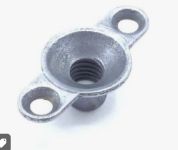
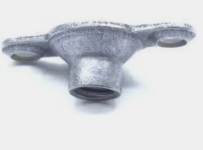
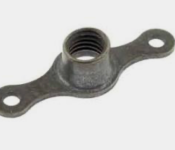
I am using a standard K1000 nut plate. I’ve read that (like you mentioned above) you can dimple the nutplate and use them; however, every time I try the rivets aren’t squeezed properly. The shop head never seem to turn out correctly. It’s offset and deformed. I didn’t realize you can purchase pre-dimpled nutplates. I believe that’s my issue. When I attempt to dimple the nutplate itself I deform it slightly no matter how hard I try not to. I think I’ll go ahead and purchase pre dimpled nutplates and go from there. Thanks for the advice.
Astro John
Well-known member
I am using a standard K1000 nut plate. I’ve read that (like you mentioned above) you can dimple the nutplate and use them; however, every time I try the rivets aren’t squeezed properly. The shop head never seem to turn out correctly. It’s offset and deformed. I didn’t realize you can purchase pre-dimpled nutplates. I believe that’s my issue. When I attempt to dimple the nutplate itself I deform it slightly no matter how hard I try not to. I think I’ll go ahead and purchase pre dimpled nutplates and go from there. Thanks for the advice.
Just to clarify, are you talking about the nutplates on the trailing edge rib for the wingtip?
If so, the only dimple required is on the rivet holes of the k1000 nutplates. The wing manual has a note there to not dimple or countersink the center holes.
One thing I do when riveting nutplates is to cleco both sides, and then use a screw to tighten down the nutplate. I usually back off just a tad once the screw is tight just to make sure there is no torque on the clecos and the rivet holes are lined up. I rivet one, remove the the other cleco and rivet 2nd one before removing the screw.
I’m referring to attempting to assemble the boot cowl. I have it cut, fitted and ready for the nut plates. Whenever I use a micro stop for thicker materials all is well and the nutplates turn out great. I’ve reached a point where I need to dimple the rivets for the nutplates instead of countersinking. The material is too thin to countersink. Do I need to dimple the nutplate as well? I saw in the post above you can buy pre dimpled nutplates. Is it necessary to dimple them? Thanks for any advice

DBeaulieu
Patrol Q/B Kit #79
Likely no need to dimple. Look up 1097 rivets. Smaller size rivet head, and you can "slightly" countersink the material you are setting the rivet into.And to clarify. I’m not attempting to install countersunk screws. JUST dimple the #40 rivet holes for the nutplate to install countersunk rivets.

Dpearson
4-Place QB (A Model)
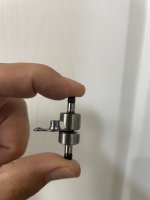
Hi Allen, I had the exact same problem you described when I started. When dimpling the rivet holes in the "arms" of the K1000 nutplates, the female side of my dimple die was crashing into the center (threaded) portion of the nutplate, causing the arm to bend. This was a particular problem on the larger-diameter nutplates (i.e. 10-32). I ended up removing material from the female dimple die (so now I have a "nutplate-only" -3 dimple die set).
Hopefully these photos make it clear. This approach works like a champ for me - I've done many hundreds of nutplates with this setup, using a pneumatic squeezer.
** EDIT**: Even with "perfectly dimpled" nutplates I had a problem when setting the rivets when using a hand (or pneumatic) squeezer which was causing bad shop heads. The squeezer set on the "shop head" side of the rivet was contacting the center of the nutplate and being pushed radially away, smearing the shop head of the rivet away from the center of the nutplate in the process. Removing material from one of my "flat" rivet sets (similar to what's shown for the dimple die here) solved that problem.
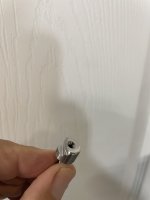
Hopefully these photos make it clear. This approach works like a champ for me - I've done many hundreds of nutplates with this setup, using a pneumatic squeezer.
** EDIT**: Even with "perfectly dimpled" nutplates I had a problem when setting the rivets when using a hand (or pneumatic) squeezer which was causing bad shop heads. The squeezer set on the "shop head" side of the rivet was contacting the center of the nutplate and being pushed radially away, smearing the shop head of the rivet away from the center of the nutplate in the process. Removing material from one of my "flat" rivet sets (similar to what's shown for the dimple die here) solved that problem.
Last edited:
Bcone1381
Finished Patrol
NAS1097 RIVET
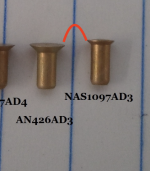
The NAS1097 rivet is the industry best practice Nut Plate Rivet. Its factory head diameter matches that of the next smaller size rivet. So your AN426-3 rivet that you are using is replaced with a rivet that has ONLY a smaller head. So that means the depth of the countersinking is less, so that means you can countersink it into thinner material like .025" And also, I always countersink with a simple deburring tool because the material removal is such a small amount, and I can see the quality and quantity of the material removal... I dont use these just because I am lazy and I want to get the job done quicker or just because NAS1097 rivets are inexpensive.
You want to get NAS1097AD3 dash 3. dash 3.5 dash 4. Spruce does not sell them individually, but search on Spruce "Ops Hole Rivet Saver". Get them from Vans, Wicks, Pegasus Auto Racing, or Aircraft Tool Supply
Checkout the area under the head that needs countersinking highlighted at the red parabola.
The NAS1097 rivet is the industry best practice Nut Plate Rivet. Its factory head diameter matches that of the next smaller size rivet. So your AN426-3 rivet that you are using is replaced with a rivet that has ONLY a smaller head. So that means the depth of the countersinking is less, so that means you can countersink it into thinner material like .025" And also, I always countersink with a simple deburring tool because the material removal is such a small amount, and I can see the quality and quantity of the material removal... I dont use these just because I am lazy and I want to get the job done quicker or just because NAS1097 rivets are inexpensive.
You want to get NAS1097AD3 dash 3. dash 3.5 dash 4. Spruce does not sell them individually, but search on Spruce "Ops Hole Rivet Saver". Get them from Vans, Wicks, Pegasus Auto Racing, or Aircraft Tool Supply
Checkout the area under the head that needs countersinking highlighted at the red parabola.
Last edited:
I have done the same thing as @Dpearson and it works great.
Countersink thickness limits are for cases where you are riveting sheets together and expecting the rivets to do the holding. In the nutplate instance, the screw is doing the holding so the countersink doesn't matter on the intermediate sheets, just the top/outer sheet.
Countersink thickness limits are for cases where you are riveting sheets together and expecting the rivets to do the holding. In the nutplate instance, the screw is doing the holding so the countersink doesn't matter on the intermediate sheets, just the top/outer sheet.
Bcone1381
Finished Patrol
The OP question brings up more thoughts....I'm glad this Q got asked.....
GENERAL AIRCRAFT HARDWARE
DONT order from their website.....just get there phone number off there sight and call them. Kenna or Karla will answer without going thru a phone tree.
Order your NAS1097 rivets (You want like a 0.1 pounds) from them AND have them send you there catalog. The Catalog a 300 page treasure hardware drawings and dimensions. Its like having McMaster Carr in a book with only Aviation Hardware.
That catalog tells us that the K1000-06 nutplate can be ordered with a dimpled rivet hole. (NAS1097-06K..... K = Dimple rivet hole)
Knowing hardware makes the build go faster and improves quality immensely.
GENERAL AIRCRAFT HARDWARE
DONT order from their website.....just get there phone number off there sight and call them. Kenna or Karla will answer without going thru a phone tree.
Order your NAS1097 rivets (You want like a 0.1 pounds) from them AND have them send you there catalog. The Catalog a 300 page treasure hardware drawings and dimensions. Its like having McMaster Carr in a book with only Aviation Hardware.
That catalog tells us that the K1000-06 nutplate can be ordered with a dimpled rivet hole. (NAS1097-06K..... K = Dimple rivet hole)
Knowing hardware makes the build go faster and improves quality immensely.
Last edited:
Thanks for all the help from the forum. I really appreciate it. I ended up taking advice from several of the posts.
I secured the nutplate with a screw prior to riveting and used clecos to hold the remaining hole. That process really helped to form a much better shop head. I also ended up dimpling the k1000. The die that I have didn’t interfere at all with the nutplate. I would say I’m satisfied with the outcome.
Thanks again
Allen
I secured the nutplate with a screw prior to riveting and used clecos to hold the remaining hole. That process really helped to form a much better shop head. I also ended up dimpling the k1000. The die that I have didn’t interfere at all with the nutplate. I would say I’m satisfied with the outcome.
Thanks again
Allen