Engine baffle seals

Gary Wallace

Well-known member
Looking for input. Have you guys installed baffle seals on the baffles at the nosebowl, or on the nosebowl openings themselves, to seal up against the baffles?; im thinking of installing the baffle seals on the baffles themselves, at the back, sides, and at the front nosebowl. Again, id appreciate any input, recommendations either way. Gary
 
I would not recommend flying a -540 engine without sealing the front of the baffles, I would expect overheating. There is also a lot of extra drag if you don't seal this area, which will cost airspeed.

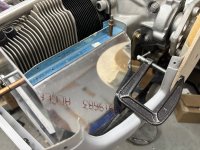
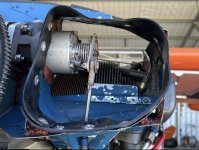
I made small tunnels from the intakes to the area above the engine, and ran a baffle across the front of the block between the two tunnels.

You can see the tunnels in these photos - however there is no baffle material installed at the front of the tunnels in the photos, as I needed to replace it. Normally there is material all the way around the tunnel entry, this seals against the inside of the fibreglass cowl.

IMG_20171028_183854.jpg

IMG_20171028_183854.jpg
 

Attachments

  • IMG_20171028_183854.jpg
    IMG_20171028_183854.jpg
    1.5 MB · Views: 3
Ive got the marginal O360. Was going to seal off for sure but wasnt sure where i was going to install the baffle seal. I was hoping/ planning on fastening baffle seals to the baffles themselves at the nosebowl, and not to the nosebowl itself. Was wondering which was more common
 
Pictures attached of my O-360 installation. This all seemed to seal great, but the bottom cooling lip was critical to the successful cooling.

Bill
 

Attachments

  • photo6882.jpg
    photo6882.jpg
    97.8 KB · Views: 15
  • photo6883.jpg
    photo6883.jpg
    92 KB · Views: 14
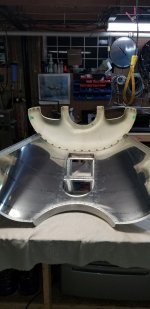
Thanks bill. So you still have no baffle seal at the bottom front? Do u recall where you got that baffle seal and was it sheets or 3 or 4 inch strips? Attached is my cooling lip picture. i hope it does its job.
 

Attachments

  • photo6853.jpg
    photo6853.jpg
    1.2 MB · Views: 4
If I'm understanding your question, the lower front flexible baffling is attached to the lower cowl (nosebowl) lip. When in place, it laps over the aluminum engine baffle at the front. This way, the pressure of the entering air - presses the flexible baffle onto the engine baffle, effectively sealing it. My first photo shows this in place. All of my baffle materials came in the Vans kit.
Your lip looks fine.

Bill
 
Thanks bill. Sorry i didnt notice that in the the pic previous. I appreciate, one again, your response . That is the direction i am going now. Baffles will be done in a week!
 
I would not recommend flying a -540 engine without sealing the front of the baffles, I would expect overheating. There is also a lot of extra drag if you don't seal this area, which will cost airspeed.

I made small tunnels from the intakes to the area above the engine, and ran a baffle across the front of the block between the two tunnels.

You can see the tunnels in these photos - however there is no baffle material installed at the front of the tunnels in the photos, as I needed to replace it. Normally there is material all the way around the tunnel entry, this seals against the inside of the fibreglass cowl.

View attachment 52749

View attachment 52748
Like Gary, I'm contemplating how to seal the baffles to the nose bowl inlets. My nosebowl has a very narrow lip that i'm not sure is wide enough to attach baffle seal to. Did you attach baffle seals to your ramps or the nosebowl in this area? Seems the seal would be better if attached to the nosebowl, that way the positive pressure in the upper cowl presses it aganist the ramp. I think if I go that route i'll have to do some fiberglass work on the nose bowl, but if others are getting a good seal attaching them to the ramps that will be a lot less work :)1b05c1e4-302a-461b-a63f-6634460866f0.jpg
 
Like Gary, I'm contemplating how to seal the baffles to the nose bowl inlets. My nosebowl has a very narrow lip that i'm not sure is wide enough to attach baffle seal to. Did you attach baffle seals to your ramps or the nosebowl in this area? Seems the seal would be better if attached to the nosebowl, that way the positive pressure in the upper cowl presses it aganist the ramp. I think if I go that route i'll have to do some fiberglass work on the nose bowl, but if others are getting a good seal attaching them to the ramps that will be a lot less work :)View attachment 102350
I would attach the baffle rubber to the cowl nose-bowl itself, so the rubber material covers the gap between the baffles and the cowl inlet. The baffle rubber should seal the against the inside of the baffles, so the air pressure holds it in place during flight. You can do this with rivets attaching directly to the lip around the cowl inlets, or with swash plates with rivinuts or nutplates attached which squash the baffle material against the cowl. The other side of the rubber material should just sit loosely against the baffles, making for easy removal.
Putting slits into the rubber where it turns corners makes it easier to install and remove the cowl for maintenance.
It looks like you should have enough room on the lip.
 
To provide another data point, I originally had the baffle material riveted to the nose bowl. It worked fine, but of course it is in two halves so there is a join.

After seeing another Bearhawk with Silicon baffles, with the material attached to the inlet baffles themselves, I've since changed to that method. I'm very pleased with the results. However it's essentially a "no data" item, and both methods were satisfactory. I would definitely recommend the silicon baffles material - it's a major improvement the previous material I had.

Current
IMG_3817.jpeg

Original
IMG_3816.jpeg
 
Back
Top