Nev
Quick-build 4-place B #25
My original gear leg fairings were made from aluminium and, like most others, relied on small screws to hold them in place. As many owners have found, the fairings move around quite a bit in service, and I was continually replacing screws as they flogged out the mounting holes.
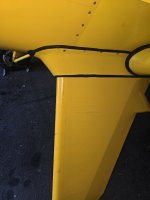
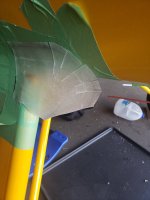
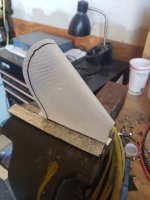
About a year ago I made a replacement set from fibreglass. The material itself wasn’t particularly important. What I really wanted was a better mounting system.
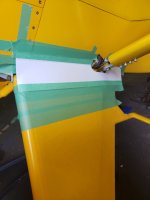
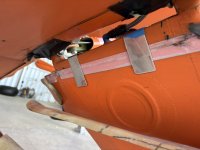
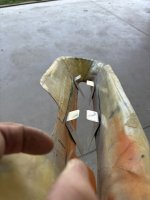
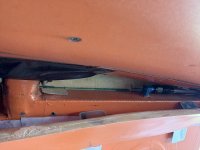
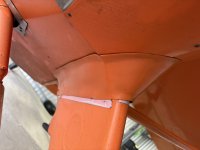
Instead of attaching the fairings directly with screws, I bonded small L-shaped aluminium brackets to the inside of each fairing. These simply rest on top of each gear leg, allowing the fairings to float in position and flex as required rather than being rigidly fixed. Even if all four brackets were to break away, the fairing could only slide down the gear leg slightly. It still couldn’t come off.
The results have been excellent. They’ve now done around 350 landings, including plenty on rough strips, albeit with silky-smooth landings every time! Video footage of the fairings in operation showed them behaving exactly as intended, floating slightly rather than transferring all the movement into the mounting points.
Initially I thought the L-shaped brackets might require periodic adjustment, but since the original installation they haven’t needed any attention. An added bonus is how easy they are to remove. I still use two screws and nutplates per side at the aft end of each fairing to hold the two halves together. Once those are removed, the fairings simply lift off.
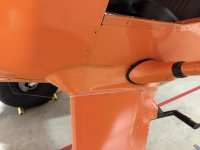
About a year ago I made a replacement set from fibreglass. The material itself wasn’t particularly important. What I really wanted was a better mounting system.
Instead of attaching the fairings directly with screws, I bonded small L-shaped aluminium brackets to the inside of each fairing. These simply rest on top of each gear leg, allowing the fairings to float in position and flex as required rather than being rigidly fixed. Even if all four brackets were to break away, the fairing could only slide down the gear leg slightly. It still couldn’t come off.
The results have been excellent. They’ve now done around 350 landings, including plenty on rough strips, albeit with silky-smooth landings every time!
Video footage of the fairings in operation showed them behaving exactly as intended, floating slightly rather than transferring all the movement into the mounting points.Initially I thought the L-shaped brackets might require periodic adjustment, but since the original installation they haven’t needed any attention. An added bonus is how easy they are to remove. I still use two screws and nutplates per side at the aft end of each fairing to hold the two halves together. Once those are removed, the fairings simply lift off.
Last edited: