MGL vs GRT vs Dynon?

MidGenerationAL

Well-known member
I'd love to hear any thoughts on the below AND any lessons y'all have learned in your avionics decisions/installation/use.

I am still probably at least a year (very optimistic) from actually being ready to install avionics but I'm not far away from the right wing being done (for now) and starting work on the left wing - and my avionics decision could determine what I am putting in there.
The mission/aircrew info:
I don't intend to fly in real IMC but could have "light IFR" use cases or training/currency uses. My daughter is 15 and might have higher ambitions some day - so if we do something limited, future upgradability could matter.
I grew up pre-digital and although I'm fine with modern tech i really do not like cluttered displays with tons of info crammed into a small space.
I would not totally ignore resale considerations, but it's likely we'll keep this plane at least 10 years - by which time whatever we install will be old and a prospective buyer who's particular may want to upgrade/modernize anyway.

MGL
The new US distributor is about an hour away - having a local guy to help is attractive
The radios seem to have a well established reputation so I'm tempted to go with these regardless of whatever else I do
Their EFIS get mixed reviews, like extended debugging with new installs (might not apply to the latest generation?). Supposed to have very excellent visibility in all lighting conditions - depending on who you listen to, maybe better than the competitors
Substantial cost savings.
If we do MGL it will probably be two 10" displays
I would probably back up with something robust and completely independent, like uAvionix AV-30.

GRT
The setup that would make the most sense is probably a 10" Horizon and a mini for backup/extra display space.
From reading manuals these sound like the easiest and most intuitive to install. Plug A into B, without hubs or adapters or chaining things in series.
Cost: about midway between MGL and Dynon.

I also got a quote from a Dynon vendor for a 12" Skyview EFIS system. AV-30 for backup. Would probably rely on a tablet for extra screen real estate. This system is right at the raw edge of our budget. I can see potential advantages to name brand recognition for resale or repair.

With any of the above, i'd get the same brand engine monitor kit

My brother recently replaced steam gauges with a Dynon system in his plane, and so has a lot of analog kit laying around unused.
I dont think i want to fool with vacuum anything, but the idea of analog backup for airspeed and altimeter has occurred to me.
 
Is Garmin not in the list intentionally? I personally oppose many of their licensing and pricing strategies but I have to acknowledge the good work 500AGL has been doing regarding Bearhawk integration, and would say it is worth considering. I became a Dynon customer back before Garmin decided they wanted to serve homebuilts, but that has changed.
​​​I am currently running the classic Skyview with dual screens. They seem to pop up for around $1500-2000 on the used market. I run the dual adahrs sensors and the remote compass module, and don't run any additional backup. I personally can't appreciate the AV30 because as you say there is too much stuff crammed into a tiny screen.
If I was outfitting a new plane, I would do it the same way, assuming I had time to wait for the used classic screens to come along.
 
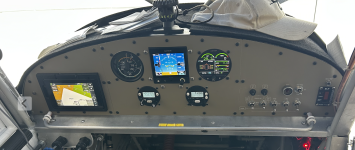
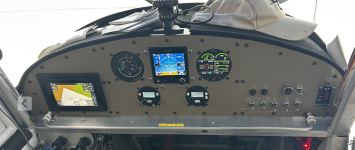
A second thumbs up for Dynon. I have dual HDX displays. The install was seamless with factory made harnesses, and the support from Dynon is excellent. One HDX would be sufficient for most installs. With 600 hours on them I'd have no issues doing the same again. Mine is a VFR setup, with no backup instruments, operating firmly on the principle that the windscreen is the Primary Flight Display and the EFIS are all backups.

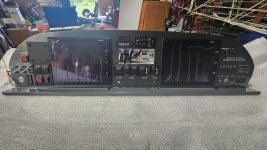
IMG_3011.jpg
 
Jaredyates: nothing in particular against Garmin, but the quote I got from them was substantially higher than Dynon for about the same capability.

Nev, what size are those displays?
 
I quoted Garmin, Advanced Flight Systems (Dynon) and found going to Dynon direct to be the cheapest option. I wanted to quote GRT but personally didn't like the interface. It seemed too 1980's. I started quoting build the whole thing my self and ended up doing the complete panel from Dynon as price was about 2K more then the bring your own panel option. Garmin was 30-40K more then Dynon for the same thing (Hard IFR).
Travis
 

Attachments

  • 20250812_182527.jpg
    20250812_182527.jpg
    2.6 MB · Views: 2
I believe MGL is out of business.
Travis, I expect you are looking at different things or different services provided as components are not 30k difference.
 
Hi, to chip in my two cents worth, for my Patrol build I went with a Garmin G3X touch and their G5 back up after looking at Dynon, GRT and MGL.
The radio and Xponder are remote too and not a dial gauge in sight. I've some MGL in another aircraft and its just not the same quality at all.

Best thing I did was to deal with Steve O'Connor in Midwest Panels, who in addition to helping me with the setup, crafted a bespoke wiring diagram and wiring harness, labelled and plugs installed for the whole set-up which included three axis autopilot. To keep costs down you could leave out the a/p and use an airspeed indicator if back-up is required instead of the G5...
 
I believe MGL is out of business.
It is my understanding that MGL (the South-African company making and selling EFIS avionics etc.) is still in business, as usual. MGL Avionics USA and Michigan Avionics (the American companies selling and supporting MGL's products on the US market) have closed up shop. You can still get MGL EFIS devices in USA from a new company that took over, Legit Avionics (legitavionics.com). Apparently, they are now importers and distributors in USA.
 
They were Drop in panel vs Drop in panel. Garmin Parts vs Dynon parts about the same. It comes down to Dynon isn't charging much to design/wire/test the panel.
 
It is my understanding that MGL (the South-African company making and selling EFIS avionics etc.) is still in business, as usual. MGL Avionics USA and Michigan Avionics (the American companies selling and supporting MGL's products on the US market) have closed up shop. You can still get MGL EFIS devices in USA from a new company that took over, Legit Avionics (legitavionics.com). Apparently, they are now importers and distributors in USA.

Correct.
This is the guy who's about an hour away from me.

MGL seems to be a pretty strong brand worldwide for experimental aircraft builders.

But it occurs to me, there could be some downsides to equipping a plane with avionics when a large number of people think the company is out of business....
 
Unfortunately this really does turn into a Coke or Pepsi discussion. All the major vendors do the same thing, which is give you ADAHRS, Engine monitoring, moving maps, ADSB and E6B type stuff on a screen. Some of them play nice with other vendors, others not so much. Ultimately you should go to a trade show or gathering where you can sit and play for a bit on all the major systems and sees which one appeals to you the most. None of the major vendors are leaving money on the table, so I think for apples-apples functionality, you are going to pay about the same for the hardware. You might get a better deal around the peripherals or one system might have a whiz-bang you just love that the others don't, but nothing fundamental. Some systems are easier to install or require less labor than the others, but that's only when you stay on the happy path and use their proven integrations.

All that said, this is my opinion having installed and retrofitted quite a few of these:
1. Garmin fit and finish is top notch. They have the best wiring hardware (backshells etc) and documentation. Doesn't play nice with non-Garmin stuff unless it's an absolute industry standard (ie ARINC stuff). I personally don't like their UI. You really get the value out of the system by going all in on the Garmin hardware, but it gets spendy fast.
2. Dynon is my personal favorite, I like their UI. The fit and finish of the hardware is very near Garmin. The SV-Net can make things easier to wire, and save some time/labor, but also can be overkill (ie the SV-Net prebuilt cable is all or nothing, even though you might only need 2 wires). Also benefits from using the entire Dynon stack in that things just work. They don't have an IFR navigator, so I would go back to Garmin for this (GPS175 is the bare minimum). Avidyne if you absolutely do not want any Garmin stuff, but they don't have anything price wise comparable to a GPS 175, and the updates are way more expensive (Jeppesen only I believe).
3. GRT is ok, the fit and finish of the hardware is not as good as G and D. They are more open with compatibility, but you can run out of ports to get everything configured depending on how things are laid out. You have the same IFR navigator conundrum. I personally do not like their UI, it's like using a DOS UI with some VGA graphics.
4. Everything else. You might save money in the short term, but I do believe you will take a hit on resale value. Also some systems just do not hold up well in the long term and with the wear and tear of mashing buttons, sitting on the ramp, etc, and you will need support or maintenance, or they will just stop making them or the parts for them. I heard somewhere that when Garmin makes a new avionics device, they order something like 10 years worth of spare parts from their vendors and stack them on the shelf. If the chips that the other guys use stop being made, do you have to just upgrade to whatever the latest is at that point?
5. If going any glass panel at all, I wouldn't have any old school analog "backups". Statistically, they are way less reliable than modern avionics, of any brand. Also, if you truly want them for a backup, you need to test, maintain, certify them every 413 check, and my guy charges per altimeter. If you aren't going to do that, why even bother with the weight and annoyance of the old analog devices? I have had several people tell me they regretted keeping the old devices on a panel upgrade, because they just don't look at them anymore, or they had some problem with it and no longer trust it.
6. I also find that if you have a glass panel, the iPad/foreflight/etc become redundant. My panel (the original builder who started project) put in an Airgizmo iPad mount with 2 Dynon screens. I don't even use my iPad in the plane anymore, everything is there on the screens (I keep in the bag for backup), so my iPad mount sits there empty (soon to be pulled for my IFR upgrade I am doing).

All of this is just my opinion of course, and you will hear all the other sides of the same arguments. You have to decide what your mission is and then live with the consequences. If that means you stay behind when all your buddies depart IFR, then so be it. If that means you pay extra and more to maintain because you like that analog safety net, then embrace it. Only you can make that decision with your dollars.
 
"Coke vs Pepsi" - very appropriate!
I dislike closed systems so I tried the "no Garmin" path for my "full IFR" panel (still in the concept phase). TLDR: I ended up going Garmin, at a roughly $2K (only) premium over a "multi-vendor" solution.
The longer story:

How did I get there?
Requirements:
3-axis autopilot
2 big screens (I'm spoiled by the G-1000 C-182's I rent today)
Electronic backup display with attitude, altitude, airspeed, direction, and CDI.
GPS LPV capability
VHF Nav (many airports around me have ILS approaches, and I'd hate to be "stuck" in the event of GPS signal degradation or outage)

I started down the Dynon path, and was good for displays, autopilot, engine instruments, etc. I planned on using a Trig TX56A for backup comm and VHF NAV.
Then it got sticky:
GPS: Avidyne is super expensive, so a Garmin GPS175 ended up in the mix.
Backup display: Dynon D30 doesn't provide direction or CDI, so a Garmin G5 ended up there too.
Usability: A good friend of mine has a Lancair with Dynon displays and a GNS430W (I think). Since the GNS and Dynon stuff don't share flight plan info, he loads his enroute flight plan into the Dynon, and uses the GNS for approaches (feeding course deviation info to the Dynon screen). It's functional, and admittedly I've never flow it, but it sounded clunky.

Since I was already 2 items down the Garmin "slippery slope", I priced out a Garmin solution that checked all the boxes. I was surprised at how small the cost difference ended up being. Yeah it's a closed system, with a non-optimal UI, but I've spend enough time twiddling and poking G-1000's (and older Garmin gear) that I think I can cope. And having the promise (yet unproven) of the Garmin boxes "just working together" is appealing to me.
 
I quoted Garmin, Advanced Flight Systems (Dynon) and found going to Dynon direct to be the cheapest option. I wanted to quote GRT but personally didn't like the interface. It seemed too 1980's. I started quoting build the whole thing my self and ended up doing the complete panel from Dynon as price was about 2K more then the bring your own panel option. Garmin was 30-40K more then Dynon for the same thing (Hard IFR).
Travis

I'm surprised that there can be that kind of price difference between Garmin and Dynon. My system is Garmin with two 10" screens, 3-axis AP and a GNX 375, no VOR or ILS navigation. When I priced the system out without the IFR navigator which Dynon didn't have, the Garmin was $2000 more.than Dynon. This was in 2022 so things may have changed quite a bit. I did a lot of research to find the cheapest vendor, it was Stark Avionics. At the time the entire Garmin package was 8% less than Aircraft Spruce. Installation is where you really save a lot of money if you are comfortable doing all your own wiring.
 
Seems like everyone's pricing is all over. In january 2025, I quoted drop in Hard IFR panels dual screens, 6 headset jacks, dual radio with nav-com, 3 axis AP, Avidyne IFR. I ended up with Advanced Flight System so this was invoiced pricing.

Bearhawk garmin was 69k (now 75k per website)
midwest garmin was 80k.
Third Garmin was 90k
​​​​​​Advanced Flight System 50k

Travis
 
I vaguely remember a discussion, from over a decade ago, on Vans Airforce, how MGL allows users to easily create what is essentially an RNAV approach into any runway, even if it is not in the database (essentially adding a private strip into it, and creating an approach to it), making it possible to couple your autopilot to it and have it fly as far down as it is safe. Dynon people participating in the discussion voiced their disagreement about that, declaring that Dynon will not be making it possible on their devices (arguing the usual liability exposure, with successors to a crashed pilot suing for damages when the pilot was found to be using his home brewed RNAV into his backyard).
I don’t know if anything has changed in the landscape (between GRT, MGL, Dynon, Garmin) and their EFISes for homebuilts.
 
GRT does the same, although I haven't done it. I asked Dynon about it, and they seemed like they wanted to consult their lawyers first. The Garmin booth at SnF reminded me of the Apple Store in HK.
 
If I was buying a hard IFR airplane I would go with Garmin or Dynon. Probably Dynon as Garmin reminds me of Apple. But just like Apple, Garmin puts out a great product.

Without hard IFR I would not consider Garmin, although the Apple folks will disagree - fair enough. To each his own.

GRT and MGL are experimental focused, with a side dish of Dynon. Dynon also makes great stuff.

I have been a HUD and glass cockpit cripple for >35 years. I flew a Wittman Tailwind most of the way across the country with steam guages and a Table and my phone last year. Everything but the phone and tablet were way down on the priority list.

I bought GRT for my EFIS, MGL for my COM, and TRIG for my xponder. I am pretty sure I would have been just as happy with more MGL or Dynon. Tech support for all have been great.

I kind of like supporting the little guy. GRT and MGL.
 
I'd love to hear any thoughts on the below AND any lessons y'all have learned in your avionics decisions/installation/use.

Trade-off are made when most of us build. I understand why big screens are very popular. I started out looking at them. The decision making can be overwhelming. I felt peace as I simplified things and ended up with a more traditional no-compromise VFR panel.

I like portables. I like Knobs, I like the Winter airspeed indicator made for Gliders. Look at the sweep the arc makes at 40-50 kts. Awesome. I cant digest airpspeed data as efficiently using any airspeed tape display.

The G5 has OAT, TAS, Density Alt (on the ground), and winds when the DG display is selected. The engine instrument is a CGR-30P, and shows 1 of four pages. The GPS is a portable panel mount Garmin Aera 660 but prefer Fore Flight on an iPhone. With ForeFlight's Sentry ADS-B receiver I get traffic and weather displayed on my phone. Weight and power consumption is minimal.

This is about a $13,000 panel priced this morning at Spruce. $1000 less if the 660 was not installed. You can EASILY installed it in your shop with the avionics harness made up by a professional shop. All flight and engine data is downloadable.

The industry trend is strongly away from a panel like this. But if the cost difference allows one to install a Trail Blazer prop then that craft's utility enters a different category.
Click image for larger version  Name:	Screenshot 2026-02-06 at 10.12.57 AM.png Views:	0 Size:	1.51 MB ID:	100012
 

Attachments

  • Screenshot 2026-02-06 at 10.12.57 AM.png
    Screenshot 2026-02-06 at 10.12.57 AM.png
    1.5 MB · Views: 2
Last edited:
There is a lot to be said about a simple panel. The utility and functionality are maintained and it fits the nature and mission of the airplane. The simplicity definitely speeds up the build and overtime there less to maintain. I didn't go that route. I have put in a two screen Dynon Skyview system with an Avidyne IDF 440 navigator and a 3 axis autopilot. I made up most of my own harnesses with help of an avionic tech friend who also made a full set of drawing for the electrical and avionic systems and did a lot of design work at no cost but to exercise his mind. I enjoyed putting it together but it took 9 months and was not cheap and it added more weight to the build. It has been a real education in many ways. So what was the reason for going the more complicated route? Because I could and it was a challenge. But, was it worth the cost and time it added to the build? That remains to be seen. There is a simple elegance the comes out when I look at Brook's panel and it fits the nature of the craft and his mission. There is more clarity about issues at this stage in the build than there was in the beginning when a lot of decisions were made.
 
Great looking panel Rod. I also like the fabric / insulation you put along the inside of the boot cowl, what did you use there?
 
I bid out the same thing, but with harnesses only and I would do the panel metal work. As several have commented, Garmin was 2k higher. I don’t understand how you got a quote for AFS at $50k when the Avidyne IFD550 alone is $22,500 with the install kit (more than the Garmin GTN 750xi). Unless you got some sort of employee / insider pricing.

I know you mentioned that the component parts were similarly priced, but the install prices having a $30k difference is stunning. You indicated you went direct to the factory?

Yes, Dynon provides database updates for a nominal fee, but Avidyne doesn’t, it’s more expensive than Garmin since it uses Jepp. The weakness with the Dynon is the reliance on either Avidyne or Garmin for a navigator. And I really don’t like the Avidyne UI after using it on a very early Cirrus.
 
Last edited:
I used IFD440. It was only $12,745 at the time. I started with pricing doing all the work myself and with them providing the equipment. I decided to ask how much for the full drop in panel and it was about 2K more. This is the price savings over Garmin drop in panels. I picked up the experimental sales guy email at OSH a few years back and emailed him. We did a zoom meeting and talked about what I wanted and then we emailed back and forth a lot mainly due to my not knowing things and changing items.

I think the Avidyne / Garmin UI are personal preferences. Garmin buttonology doesn't make sense to me. I use GNS430 right now till the BH is done.

I can send you the experimental sales guy info if you want it.
Travis
 
Back
Top