Fuel Line Routing

Archer39J

4 Place Kit Builder
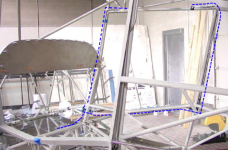
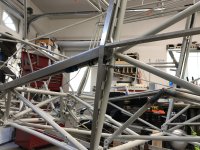
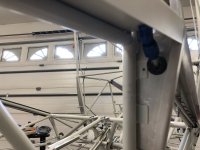
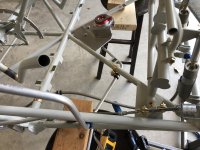
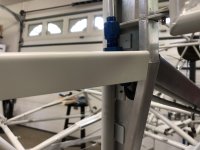
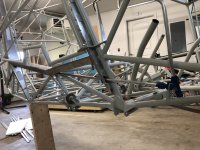
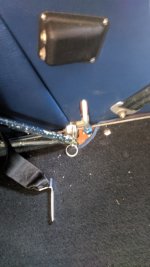
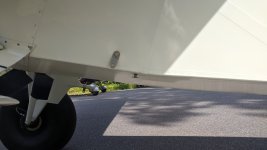
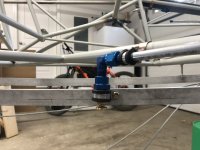
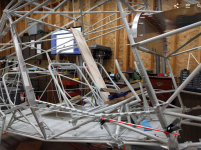
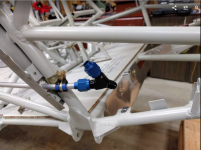
I'm routing the fuel lines and have run into an issue. I've positioned the fuselage to the 3-point ground attitude of 13 degrees and it seems the fuel line fwd of STA C runs slightly uphill. Though you can't tell from the photo, the red section is sloped up maybe 1/2 or 1 degree or so. The pass through point I chose through the boot cowl former is even lower than most examples I've seen, even in the manual.

This is in line with the attach tab you see in photo 2, but it looks like many folks chose to go even higher.

Have others addressed this, or folks taxiing around with low points in their fuel system and it just hasn't been an issue? I've also seen examples of lines running uphill out of the fuel valve (though mine faces aft) and apparently that hasn't been a problem either.
Fuel1.PNG
Fuel 2.PNG
Fuel 3.PNG
 
If you have the aft of the line as high as possible, and the forward side as low as possible - then it is about as good as it can get. I do not know of any problems resulting from this on all the planes out there. Mark
 
If you have the aft of the line as high as possible, and the forward side as low as possible - then it is about as good as it can get. I do not know of any problems resulting from this on all the planes out there. Mark

Yeah that’s about what I figured, if it hasn’t been an issue I’ll move on.
 
Thanks for bringing this up Dave. For me, I see this as a significant issue as I live in a freezing climate and am planning on maximizing angle of attack for short field ops. I'm also planning on a raised threshold to eliminate the mouse door so I'll likely be able to keep the fuel line higher at the door midpoint to address it.

Sure is good having this group to share details, thanks all!
 
Well I routed my lines normally then had an IA come take a peek and he was not happy with my default low point at the rear corners of the door frames. Point is we have lots of poor fuel sources and plenty of moisture and lots of cold for it to freeze at these corners. He suggested that I run a line off of a T at that spot with a drain line going down to a quick drain on both sides. I suppose I could link up both sides in the middle and just have one drain, but still, kind of a bummer. What are the forum’s thoughts on this? Assuming that I cannot improve on the angle of the line here without remodeling my door frame (not an option) would you put in some new low point drains? That means with aux tanks I’ll have SEVEN places to sump! Sheesh.
 
Last edited:
I thought the low spot requirement was for level flight. If you are on big tires I don't think it is possible to route the rear lines under the door in such a way that there is not a low spot.
 
The concern is that on the ground, water will sink to the low point and accumulate where it can not be drained. In this case, the door corner. There it can freeze and become an obstruction to fuel flow or worse bust a line/fitting. In flight the circulating fuel will drag the water through the gascolator and/or filter and low points won’t be an issue.
The objective of putting the gascolator at the low point is for this purpose. The door corner problem complicates that.
 
Good idea :)
 

Attachments

  • photo6248.jpg
    photo6248.jpg
    2.2 MB · Views: 0
  • photo6249.jpg
    photo6249.jpg
    1.7 MB · Views: 0
  • photo6250.jpg
    photo6250.jpg
    2.1 MB · Views: 0
  • photo6251.jpg
    photo6251.jpg
    1.6 MB · Views: 0
  • photo6252.jpg
    photo6252.jpg
    2 MB · Views: 0
So on the rotisserie there is no apparent problem. But, once I put it on its gear the slope becomes positive under the door.
 
I think it looks good Ken. I wouldn't change it. Plenty of BHs flying with the same, or not quite as good, routing with no issues related to that possible low point. On normal sized tires there won't be a low point; it will be down hill all the way to the fuel valve. Install bush wheels and you will likely have a low spot there but so far the other guys on big tires haven't had any issues.
 
Thanks John, that was my thought when I built the lines. The IA I had over just made me doubt my decision.
 
Update: had another A&P look at it and he thinks I need to have drain(s) too... He keeps his 170 outside all year and gets enough water to freeze his wing sumps regularly. Having the extra lines/drain should keep the ice from blocking the system theoretically.
 
Ypu have the fuel line as far up as possible where it starts on the aft side of the door sill. Hard to say if you have the forward side as low as it could go but it looks pretty close. And if the problem the AI's see is on the aft side then lowering the front would not help anyway. I do not know of anyone who has had a problem like your friends are concerned about. But I suppose it could happen. It is very hard to keep all the lines flowing down hill when you have big tires. Mark
 
One thing I re-did was make the holes in the formers big enough to pass the flare nuts. I used a big snap bushing, and two layers of clear fuel tubing over the fuel line to fit the bushing.
 
Thanks Mark. Between the added complexity and weirdness of the “fix” I am not sure what to do or not do. I would have to run lines through the floor between the rear seat and rudder cables which would be exposed and vulnerable to baggage when the seat is out. Putting drains and extra lines for the drains might cause other issues. If I catch water in these lines as the de facto line points, and have an inline pre boost pump filter, why do I have a gascolator? Will the vulnerability to leaks and damage from baggage over the exposed sections of this line be more of a risk than the unlikely event of water freezing in the lines? I suppose I could build an aluminum cover for that section. Argh!
 
Murphy's law.....Whatever can happen will happen. So it is important to consider all the possibilities that could go wrong during flight and act to counter them.

-Could a limitation be written to prevent adding a sump? (A minimum of X gallons with takeoff and landing on Both tanks with temperatures below freezing.)
-Could the aircraft be stored in cold weather with the tail placed on a platform to allow the aft line to slop downward.
-Adding a sump is not Murphy proof unless its exercised.

If the aft fuel line on one side got plugged up with ice.....
-will ice (or water) be present in the fuel sample at the tank? (My fuel sumping experience dates back to the prior decade....I cant recall if I ever saw ice in a fuel sample.)
-will problem be masked by the tanks front sump's fuel supply for the entire flight?
-will the problem be masked by the selecting BOTH tanks?
-If we still took off with 1 tank selected, is there enough fuel in the forward line to run up, take off, and raise the tail to cover that front bung and provide a fuel supply? How often do we takeoff with less than half tanks? But doing so still masks the problem.

The above illustration is not justification for not adding a sump, rather it should show us how a problem can be hidden and mysterious, and issues arise when switching to Tundra Tires, or shows why no one has had a problem yet.

The Patrol has the same issue on the right tank only. Its slope is good with 800 x 6 tires, but larger tires will cause an issue. The left tank fuel supply is steeper because there is no door to go under.
 
Thanks Brooks, I like the thought process. Just for more thought here is the specific scenario that makes me hesitate: My wife and I are camping in the winter at a favorite forest service cabin. Plane sits over night and water condensates and freezes just right. The next morning I do a run up and get fuel via the front lines until I rotate and climb out steeply to avoid trees and the front lines get uncovered. Engine coughs and quits at 400 feet. So you bring up a good point: how much gas is required in the mains to keep the front lines flowing during a Vx climbout? 1/2? A limitation might work here to avoid a messy drain setup.
 
Last edited:
Brooks, I thought of similar. I wouldn't complicate the fuel system. If you are storing your aircraft or flying it infrequently in cold weather, I would make sure to store it with tanks full (reduces condensation), and tie the aircraft down with a platform for the tailwheel.

Adding more to the fuel system on an otherwise simple aircraft doesn't make sense to me.
 
Mine is equipped with 7 drains. One for each of 4 tanks, the gascolator and one at each low point behind the doors on the belly.
 
Aha! I’m not the first! I am curious how you have routed and secured your door corner drains. Any chance we can glean some details from you? I’ve been trying to figure the best fittings etc to use.
 
I didn't build the plane, but I'll see if I can get a few photos to hint at how it was done.
 
Ken,

I'm not sure what good a drain would do, if the water in those lines is frozen... You can open the drains all you want, but the "ice" is not going to come out until the line is warmed to the point the it melts and becomes liquid again. Seems like you'd have to make a habit of pre-heating that area somehow, and then immediately opening the drain, for the drain to have any real benefit to you in that situation.

I think that a "real" solution would require some kind of a "sump" at that low point (like another gascolator - or two, one on each side). Is it worth it? You're the builder and only you can decide.
 
Jim, good point for sure. The advantage of these drain lines in this scenario would be another 18” of line on each side to catch wanted outside the main feed to the engine. It will function as a sort of gascolator in that respect. If you look at a Citabria there is a lot of line going to the low point in the aft fuselage to a drain while the gascolator is on the firewall. In my case (I’m not sure about the Citabria) the primary fuel flow would then bypass this frozen cache of water unless there was so much water that it overflowed to the main line. If these lower lines freeze I would now now where the water was and would necessarily heat the area until all water was drained from the system. None could escape this procedure as it would otherwise with an undrainable low point. Clearly I’ve chosen my route here and will post pics when I finish.
 
They're not much, but here is a few photos. Looks like there is a T (not visible) under the rear edge of the door. The bottom of the T goes down to the belly and a quick drain. Note that this one was built with an additional T-fitting to install a ferry tank. I don't believe it was ever used. The headset jacks that are visible are for the rear seats.
 

Attachments

  • photo6267.jpg
    photo6267.jpg
    1.8 MB · Views: 0
  • photo6268.jpg
    photo6268.jpg
    1.6 MB · Views: 0
  • photo6269.jpg
    photo6269.jpg
    2.3 MB · Views: 0
Yeah, I can see how that would work pretty well. I wasn't thinking about having an 18" column for the fuel/water to flow into. That SHOULD do the trick. I've never sumped more than a few thimbles worth of fuel out of a tank, but I've heard tales of aircraft sitting out in rainstorms where they took on a 1/2 gallon of water... But you're right – if nothing came out of that drain when the temperature was below freezing, it would be a dead giveaway that you have some water in that line. Thawing and draining until only fuel emerged should resolve the issue. Guess I've got another item to think about. I'm only planning for 8:50x6:00 tires, but I'm already thinking there might be a low point behind the door, no matter how careful I am with routing the fuel lines...
 
Personally I think this is an issue which gets overstated.

I have a drain per tank and the gascolator, if any water gets into small low points then it will not be enough to cause trouble. I have tested this.

See attached photo of the water taken from the gascolator. Other water sitting in the minor sumps in fuel lines, fittings, etc. all passed through the engine with nothing more than a cough. This happened on the ground before I even got to the runway.

IMG_20180116_195937.jpg
 
I think you’re absolutely right so long as it doesn’t freeze into a line blockage. That’s an impressive amount of water too!
 
This is my “fix” (or unnecessary mod depending on your POV.)

It's a little hard to tell, but I think you'll have yet another low point in front of that one. If what I'm imaging the rest looks like, you've isolated that spot with a low point, but the low point in front of it won't send water back up the fuel lines.
 
I don’t follow. I might be a bit slow... where is the new problem spot? Everything from the wing root to the forward T should be downhill to this drain. From the forward T on will be down to the gascolator. I don’t see any low points in between.maybe the angle of the pic is misleading?
 
Ya, I might be confused by the pictures... but from that back T, it's going to T up with the front tank fitting coming down the door frame right? Then under the floor to the gascolator and fuel selector. Those are going to be somewhat isolated from the drain you put in. I'm just not picturing how this solves anything.

I just re-did my whole fuel system from what the previous builder had in place. I really don't like the location of where most people put the gascolater either. I should have taken pictures before heading out on this trip.
 
FYI - fuel systems are one of the areas that airplane design engineers do not like builders making changes. What Bob designed has worked well on a LOT of planes. So I would be cautious re-designing the wheel. Mark
 
Yeah, you almost got it, but there is a drain in the gascolator too. From the T it would probably flow to the gascolator but it doesn’t matter if it flows to the front low point (gascolator) or aft (new drains) now because I can detect/get the water out at either location. The only problem was a low point that could not be relieved of water at the back corner of the door, now there are three low points with three drains. Am I making sense?
 
I just spoke with Bob and asked him about this discussion. He basically feels that not enough water could accumulate in the lines to make the engine quit. He said you can certainly get enough water in a fuel tank to make the engine quit. He said the gascolator would hold more water than could be in a low spot in the fuel system lines. He did mention something that no one has brought up - the possibility of water freezing and breaking a fuel line. It has never happened but perhaps could.

He also said no problem running drains like Ken did - with one caveot. When you have fuel lines on the bottom of a fuselage they can break off and spew/leak fuel everywhere if the plane ever goes down on its belly. Granted - the gascolator is down low where this could also be applicable. Bob once saw a Beech Staggerwing land gear up and all these fuel lines on the belly broke and leaked fuel. The plane burned up. The pilot got out with no injury. But the plane burned up because of fuel lines down low on the fuselage belly. Mark
.
 
... He did mention something that no one has brought up - the possibility of water freezing and breaking a fuel line. It has never happened but perhaps could...
.
Actually, freezing has been brought up on this thread by several people many times including on both pages. Freezing might not get heard in Texas. :rolleyes:
 
Like Mark G, my first thought was "What is this 'freezing' thing these guys are talking about?" But in all seriousness, I had not considered that a fuel line might split from the expansion as the water froze... I might do an experiment with a short section of my fuel line filled with water, then sealed off and placed in a the freezer to see if it splits. I kind of doubt there's enough water to expand enough to overcome the integrity of the aluminum fuel line I'm using.
 
even though I’m concerned with freezing my drains would not prevent any expansion type damage. I would hope (and conversations with people smarter than me lead me to believe) that the expansion would occur along the line for the most part. Maybe a demonstrative experiment is in order this winter... could justify or dismantle my blockage argument too :)
 
BTW, if that came across snarky, I apologize, it wasn't meant to be.

Unfortunately, I've seen way too many split lines, tubing, and fittings from freezing. Even if there was no line damage, seems to me that no fuel flowing might not be desirable either.
 
Jim, frozen water will split a steel line, I'm not sure why it wouldn't split aluminum. Aluminum isn't that ductile.
 
I would think the small volumes of water we are talking about cannot break the line. Ice often won't even break plastic lines PROVIDED the water is not freezing the entire line solid i.e. the line only contains a relatively small proportion of frozen water compared to liquid fuel / water. If there is room for the ice to expand along the line, then the ice will travel along the line as it freezes.
 
Plastic lines are what we use when you know it's going to freeze. Look at PEX vs copper water lines.

But you're right, unless it froze the whole line it's unlikely it's burst.
 
zkelley2, I have seen it split larger sizes of PVC, steel, copper, etc. I just have no experience with small-diameter (1/4 inch) aluminum, so I guess I'll have to give it a try when I get some time...
 
As long as there is no check valve built into the system up stream (towards the tank) of the low point, any expansion from freezing would take the path of least resistance- towards the tank. When a water pipe in a house freezes and splits, it is because a section of the pipe is plugged (such as a slug of ice plugging off the open end, and THEN water downstream freezes.

However, I was always under the impression the gascolator should be at the lowest point in the system anyway, which is where the water would collect...
 
Ferry tank? A bearhawk in super economy cruise can already go 4-5 hours with standard tanks and 5-7 hours with aux tanks. I'd be installing a urinal before a ferry tank.
 
And the Patrol I'm building can likely go almost 10 hours at super-economy cruise speeds (AKA "Max Cruise for a SuperCub", LOL). But there might be times I want to go somewhere as fast as possible, with as few stops as possible. (Hmmm. Dallas to OSH non-stop might be do-able with a 20-gallon ferry tank...) Just kidding on that one. But the idea of flying out to the back country, and having enough fuel to fly around a while, spend the night at a remote strip somewhere, then fly back to civilization is pretty appealing to me.
 
Back
Top