Engine Preheat Systems

rodsmith

Well-known member
I will be installing a preheat system on my IO-540. Looks like the choices are limited, either Tanis or Reiff. The Reiff is somewhat cheaper. The main difference between the two is the Reiff uses a band around the base of the cylinder, while the Tanis uses a threaded plug that replaces a rocker cover bolt. The heating philosophy is different, Tanis says can remain plugged in continuously up to 100 deg ambient, Reiff says only use before flying. Would like to hear from builders with experience with either system.
 
Rod, I don’t mean to be “that guy” whom responds while lacking the experience you seek but if I may share my thoughts.

Whether it’s Reiff or Tanis the function of heat transfer is the same. I would choose the Reiff becuase I hate spark plug mounted CHT probes which are required when using the Tanis. I don’t think leaving either system plugged in all the time is a good idea. The daily ambient temperature swings will promote moisture inside the engine. A good insulated engine cover will help dampen the temperature swings so if your situation requires heat all the time then be sure to get a good cover.
 
I will be installing a preheat system on my IO-540. Looks like the choices are limited, either Tanis or Reiff. The Reiff is somewhat cheaper. The main difference between the two is the Reiff uses a band around the base of the cylinder, while the Tanis uses a threaded plug that replaces a rocker cover bolt. The heating philosophy is different, Tanis says can remain plugged in continuously up to 100 deg ambient, Reiff says only use before flying. Would like to hear from builders with experience with either system.

While those two are choices, I wouldn't say that they are the only choices. You can also get a $10 peel and stick pad for the oil pan. But to Jon's concern I think they have fixed the issue of taking up the CHT wells by switching to the rocker cover bolt.
 
While those two are choices, I wouldn't say that they are the only choices. You can also get a $10 peel and stick pad for the oil pan. But to Jon's concern I think they have fixed the issue of taking up the CHT wells by switching to the rocker cover bolt.

That’s right Jared! If forgot about that. Thanks.

I didn’t want to go off an a tangent and mention other systems. I figured Rod had researched and narrowed it down to those two. Of the two I still choose Reiff. I might put one on my plane if I ever get skis installed and do some winter camping. For keeping the engine heated all the time I like the twin hornet from aircraft engine heaters.
 
I hadn't come across the twin hornet. Looks like a viable alternative with an insulated cowling cover.
 
Hey Rod, the guys I’ve spoken to about this around here seem to prefer the Reiff system. Think it heats the whole engine more evenly but, in addition, using a car heater of some sort inside a cowling cover compounds the positive effects. Most Everybody agrees that you are better off not heating the engine 24/7 but just long enough before a flight to heat the engine evenly. But, my thought is that as long as your engine components are not oscillating temperatures frequently, keeping it warm can’t hurt - you’d have to be sure your solution kept everything warm regardless of weather conditions…. That’s speculation.
Most of this is 2nd hand but it’s from talks with good experienced Alaska GA pilots and mechanics. I only heat up a plane before I go flying but I can’t prove the results.
 
Another Viewpoint:

I'm a Tanis fan. Tanis heats the cylinder head using a threaded element in the valve cover. The Reiff ring around the cylinder base has difficulty getting heat to the head. Here is a shot on Tanis website of an engine with 3 cylinders heated by Reiff's band around the cylinder base, and the bottom three heated by Tanis' element in the valve cover screw. After 36 hours the red shows warm cylinder heads.

Tanis claims there warm cylinders are above the dewpoint so no condensation will form there. So Tanis says it fine to leave it plugged in. A Prop is a big heat sink....metal even bigger... and a constant speed prop will form corrosion in its hub if condesation forms there. I'd be putting my prehearter on a remote switch of some kind that I can control at home.

Tanis FAQ has good data on leaving it on. https://www.tanisaircraft.com/faq/

Click image for larger version  Name:	Screen Shot 2022-12-16 at 5.44.11 PM.png Views:	0 Size:	194.5 KB ID:	79897
 
Last edited:
Very happy with the Reiff system that I have on my Patrol. I also considered Tanis but went with Reiff because of the cylinder bands. I would choose it again, for sure. Nothing against Tanis, I’m sure it’s a very good system. I have an engine blanket from Bruce’s and preheat every time I fly in the winter, regardless of temperature. I use a smart plug/app and hangar Wifi. When away from home, a small propane generator does the trick with one green bottle. The blanket is a critical component, in my opinion. Generally, I’m shocked at the percentage of aircraft owners that don’t preheat.
 
Here in Southern California we rarely have to use engine preheat so I don’t have any personal experience with it. However I also have a RV7 I built, and this was recently discussed on the Vans forum. An after market company called AntiSplat Aero that manufacturers items mostly for RVs, has a new engine preheater that threads directly into an oil drain on Lycoming engines. It was tested by numerous pilots for a year before being available to purchase.
the comments on the forum were very positive. They sold out the first batch of units in two days. At a price of $89 I was even going to get one but now have to wait for the next run of units to be made. Just something to consider as it seems to be pretty much hassle free.

https://antisplataero.com/products/no-hassle-engine-pre-heater
 
I went an entirely different route. I took a small electric space heater and added a bit of ducting so that I can set it under the plane and it routes the heat up into the cowl exit area. 45-60 minutes and the entire engine is nice and warm, the engine cranks like it does on a warm summer day and the oil temp is already 70-80 degrees F and the pressure is where it belongs. I have never lived close enough to my hangar to make it convenient to plug in a heater 4 hours before I want to fly, but 45-60 minutes? That works great to turn it on, preflight and maybe go over to the FBO and get warm for a few minutes or run to get breakfast while it warms up (if the flight isn't to a breakfast fly-in) I will add that if my wife is going with me 45 minutes is entirely too long to wait.

Another reason I went this route is my last plane was certified so it was more convenient to do this that add an STC for a heater. So I already had this setup when I started flying my Bearhawk.
 
The anti-splat oil pan heater is a good one I think for heating oil in the oil pan two hours before flying. If we Preheat then fly with Reiff or an oil plan heater we generally are doing just fine avoiding metal-metal contact during start. Don't leave it on all week, or all winter to avoid condenstaion. Just a couple hours prior to flying.

Keep an open mind if its real cold. Cylinder scuffing is an issue at some cold temperature CHT. Do some data research of your preheaters ability to raise the CHT. If I can't get 50F then I'd be shopping.

Engines generally don't wear out, they rust out. If the cam, cylinders and prop hub are colder than the dew point, then condensation or frost form. My goal is to make aware that an unhealthy environment can be unknowingly be fabricated by its owner.

I've seen frost inside my hangared C-140's C85 engine through the oil dip stick one Michigan morning in November. Today I'd fix that after a flight by using a hair dryer to blow hot dry air into the oil dipstick out the crankcase breather for 30 seconds then hook up the dehydrator before I shut the hanger lights off. But this is not a rust thread, its a preheat thread....the two dovetail together though as a preheater can produce condensation.
 
The anti-splat oil pan heater is a good one I think for heating oil in the oil pan two hours before flying. If we Preheat then fly with Reiff or an oil plan heater we generally are doing just fine avoiding metal-metal contact during start. Don't leave it on all week, or all winter to avoid condenstaion. Just a couple hours prior to flying.

Keep an open mind if its real cold. Cylinder scuffing is an issue at some cold temperature CHT. Do some data research of your preheaters ability to raise the CHT. If I can't get 50F then I'd be shopping.

Engines generally don't wear out, they rust out. If the cam, cylinders and prop hub are colder than the dew point, then condensation or frost form. My goal is to make aware that an unhealthy environment can be unknowingly be fabricated by its owner.

I've seen frost inside my hangared C-140's C85 engine through the oil dip stick one Michigan morning in November. Today I'd fix that after a flight by using a hair dryer to blow hot dry air into the oil dipstick out the crankcase breather for 30 seconds then hook up the dehydrator before I shut the hanger lights off. But this is not a rust thread, its a preheat thread....the two dovetail together though as a preheater can produce condensation.

Good point Brooks.

Cylinder scuffing, zero clearance at the crank bearings, zero clearance at the cam, etc. Heating the oil doesn’t take long but to get those critical and expensive internal engine parts takes time, several hours.

I too have seen frost inside the dipstick tube of an engine on a cold day. Moisture exists and we just have to decide how we want to deal with it.
 
That new Anti-Splat heater for under $100 looks amazing. They sold out (Vans guys bought them up quick) in under a week I believe. A buddy across the hanger taxiway last week was “heating up” his engine with a propane heater and the tubing caught on fire while I was standing there watching. The flames were within 2’ of his engine cowling. I was stepping back and very concerned, as a Vietnam helicopter pilot he seemed unfazed. :eek: I gave him the link to the Anti-Splat heater and he ordered one before they sold out. Looks like a very good item. There is a long thread about it with many questions answered by Allen from Anti-Splate over on the Vans forum.

https://vansairforce.net/community/showthread.php?t=212297
 
I have a Honda 2000w generator set up to run on propane or gasoline. It was an aftermarket kit.
 
I ordered the Anti-Splat heater for my O-360 in my RV-7. I don’t think it would replace a dehumidifier system but for shortening the time I spend waiting for the engine oil to warm up it seems like a good product. I tried a heater pad attached to the sump but it didn’t heat the oil sufficiently.
 
It’s a Baja 700/900. Weighs around 17lbs. Reiff system with sump heater and the cylinder band heaters come in below its capacity so it works great. Engine blanket on, plug in the gen, drink coffee until the gen quits, go fly. I had a Northern Companion in my 180 and thought that was great but I like this much more. Considerably safer and can pull double duty charging electronics. The weight is the penalty but I feel it’s still the best system.
 
The dry-air / dehumidifier systems some of the guys have come up with seem to be quite nice. Threads on SuperCub.org and I’m sure vans as well. Something worth considering for anyone that doesn’t fly often. Biggest issue with moisture is an engine that doesn’t run often, or very long. You have to fly at least an hour at 190* for the oil to burn off contaminants.

For the price and effectiveness the oil probe heater from anti splat seems great. For long term the Reiff is the whole package, we have installed many.

If you’re on a budget, on bush wheels and have a spare plastic barrel here’s an option. Cut out an opening on one side a bit larger than your kerosene salamander heater. Cut the top out and place it under the engine. Fire up the heater a good 2’ away and the barrel sends all the heat up into the engine cowl via the bottom opening. Cowl cover or blanket over the top and In 20 mins oil goes from 10* to 60*, and heats everything.

In the field it’s hard to beat the independence of a propane stove and straight duct up into the engine compartment. Nothing needed but a spark.
 
I will be installing a preheat system on my IO-540. Looks like the choices are limited, either Tanis or Reiff. The Reiff is somewhat cheaper. The main difference between the two is the Reiff uses a band around the base of the cylinder, while the Tanis uses a threaded plug that replaces a rocker cover bolt. The heating philosophy is different, Tanis says can remain plugged in continuously up to 100 deg ambient, Reiff says only use before flying. Would like to hear from builders with experience with either system.

I didn't use either of those.
I used a sump heater pad. As far as plug-in electric heaters go, I loved it and would definitely do it again if that was my requirement - but for anyone going backcountry overnight, electric heaters are clearly of little use, so I haven't continued with it.

To my simple way of thinking, heating the oil sounds much better than either the Tanis or Reiff based on very little reading - why heat the cylinders when it's the oil and block which soak up all the heat? If the oil is piping hot then the cylinders are more than warm enough, from my experience with the system.
 
A quote that makes the point better than I was able to:

“How significant is this problem. Well, take the TCM IO-520-series engines used in manyBeech and Cessna singles and twins, for example. The IO-520 overhaul manual lists theminimum crankshaft bearing clearance as 0.0018 inch (that’s 1.8 thousandths) at normalroom temperature.

What happens to that clearance when you start cooling the engine down? TCM doesn’t say.But tests performed in 1984 by Tanis Aircraft Servicesin Glenwood, Minn. (where it gets mighty cold) indicated that an IO-520 loses 0.002 inch(2.0 thousandths) of crankshaft bearing clearance at -20F. An engine built to TCM’sminimum specified bearing fit at room temperature would actually have negative bearingclearance at -20F-in other words, the crankshaft would be seized tight!

You’ve probably noticed how difficult it is to pull the prop through by hand beforestarting in cold weather. Now you know why. It’s not that the oil is thick (because if youuse multivis oil, it’s not). It’s that the clearance between the crankshaft and bearingsis tighter than normal. If it’s cold enough, you might not be able to pull the propthrough at all.”

https://www.avweb.com/ownership/the-whys-and-hows-of-preheating/
 
For my engine, when the oil sump preheater was on, the oil was around 60*C (140F) after an hour's heating. The engine itself (CHTs) were sitting around 20*C (70F) from memory, which is plenty hot for all parts, it swung like a hot start, very easy starting.
 
Hmm. A XP Reiff system doesn’t even provide that kind of preheat performance. Perhaps the starting point is the difference.

If I was dealing with freezing and above temps then an oil only heater would be great. Turn it on for an hour then good to go. But we see freezing temps when camping mid summer and sub-zero during the winter. It was -11F this morning and 5F when I got to the airport.
 
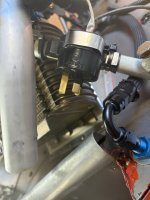
This is the Anti-Splat oil heater. The length including the cord is 30”
 

Attachments

  • photo13210.jpg
    photo13210.jpg
    2.1 MB · Views: 0
  • photo13211.jpg
    photo13211.jpg
    2.4 MB · Views: 0
but for anyone going backcountry overnight, electric heaters are clearly of little use, so I haven't continued with it.

I’ll disagree with this. I use a small propane generator for those scenarios. Yes, 17 pounds extra weight but the Reiff is a sump and cylinder heater for a more thorough and faster preheat. I prefer this to the open flame that I previously used for off grid preheating.
 
Glad I started this thread, I've learned a lot and probably going a different direction. I am now thinking of going with an insulated engine cover and a twin hornet heater that will just stay plugged in during the winter months. Not sure if it is adequate if I was traveling and parked outside during serious cold, but that would be a rare occurance. Eventually I will put heat in my hangar, when I poured the slab I installed tubing for in floor heat. I'm probably going to have an external wood fired boiler for the heat supply instead of paying for natural gas.. No big deal as we heat our house with wood, just a couple more trips for firewood in the summer.
 
It’s a Baja 700/900. Weighs around 17lbs.

I looked that up and the Baja appears to not be available anymore? I also found one from Ryobi that sure looks like the same generator in different colors. It appears to be not available yet? ...maybe I'm looking in the wrong places. All the alternatives seem to be a good deal heavier. The 1000W Honda lists at nearly 30 lbs.​
 
I’ve had the stick on sump heater since the BH first flight. The key is a good engine cover. If it’s really cold I have an oil heater(as in an entry way or garage) that I built a shroud for and position under the cowl. I don’t normally fly much when it is cold. If i do the engine cover goes on immediately after shut down. Three hours at zero the engine will still be warm to the touch. There are a lot of ways to warm up an engine that work very well, but I think the key is a good insulated engine cover.
 
I believe the Ryobi is the same basic thing. The Baja was less than $300 and is small and light. As a bonus, it’s made in China so I’m sure it will run forever….ha ha. It has been working fine for 3 plus years, hopefully it will keep on trucking. I do think my Honda 2000 will run forever but I feel like the Baja has already outperformed my longevity expectations.
 
I just installed the tanis system on my o-540 because I have multiple friends that use it and all love it, a few of them leave it plugged in all winter and haven’t had any issues but they also fly fairly often.
Tanis recommends replacing the intake tube bolt with the heating element probe since it’s deep enough to engage the threads on the entire length of the probe.
 
My two cents on Reiff: I purchased the Reiff system for my Continental IO-550. The oil pan heater is fine, as far as it goes, but the cylinder bands would not fit on my engine because of a ridge around the base of the cylinder. Check your cylinders before ordering Reiff.
So, I'm living with the oil pan heater. It's plugged into a Switcheon unit so I can turn it on via cellphone a few hours before I plan to fly. (The Switcheon is a nice unit -- dead simple to use, unlike its predecessor.)

-Rick
 
A friend of mine did that too. Actually he used an old wall heater from a building supply recycler and fabbed a simple plenum to it for attaching a flex duct. It looks like part of a male elephant but apparently it works great. We have no WiFi at the hangar and it's a bit of a drive to get out there, so this solution has some appeal.
 
Last edited:
Click image for larger version  Name:	IMG_1400.jpg Views:	0 Size:	2.55 MB ID:	92765 Click image for larger version  Name:	IMG_1401.jpg Views:	0 Size:	1.99 MB ID:	92766 Living in cold-ish country, I have tried several different types of pre heat. The Bonanza has the Reiff oil pan heater and is plugged in 8-24 hours before flight and works well. my favorite solution, though is for the cub. inside the pictured trolley is an electric heater of the oil filled type. I’m comfortable leaving this unattended 24/7 as its heating elements are all confined internally. a small computer fan pushes air up through the box to the engine compartment. with the blanket installed, the entire engine compartment stays well above 50 even on the coldest of winter days here. typical temp is over 70. and to others’ point, the temp is stable and above dew point , which is the key to fighting condensation. Click image for larger version  Name:	IMG_1400.jpg Views:	0 Size:	2.55 MB ID:	92765
 
Last edited:
This is interesting as I have ordered the E-Z Heat Model 540 oil sump pads to use on my BH. I have a Switcheon 2-channel box and intend on getting a cockpit heater too.
 
Another data point here - I got an engine cover made with a synthetic duvet sewn inside. This is used with plugs in the boot cowl tunnel and cowl intake, underneath the cover, to trap the air inside the cowl. We've proven it's great alternative to an engine heater for overnight trips, in many ways it's superior to a heater in a backcountry environment. Of course, an engine cover plus a heater would be the ultimate solution.

For example:
On a winter night of about -5*C (20*F) the engine would normally cool to the same ambient temperature as the air. The oil and engine block would be below freezing temperature.
With the cover installed, the engine stays around 15 to 20*C (60 to 70*F) and it starts like a hot summers day.

Here's a comparison for discussion.

Engine cover for backcountry use:

Advantages:
- keeps the engine warm for 24hrs in freezing temperatures, or longer if the days are hot
- quick and easy to use
- no risks
- also protects paint, decals, etc. from wear and UV damage

Disadvantages:
- bulky
- may requires drying after use


Portable engine heater for backcountry use (i.e. fuel, battery, or electric heater):

Advantages:
- warms up the engine from cold

Disadvantages:
- takes a lot of time to use
- complex, can fail
- fire risk
- may be bulky depending on the one you choose
- may have permanently installed components

For multi-day trips in constantly cold temperatures, where the aircraft is left sitting outside while you're away, an engine cover plus a heater is the ultimate solution. No doubt about that.

Sorry about the bad light for photography, photo of cover installed. It attaches to the cockpit cover with a zip.
Click image for larger version  Name:	20240406_144451.jpg Views:	0 Size:	3.51 MB ID:	92850
 
Those small portable batteries will likely power my Anti-Splat oil warmer a few times for 30-45 minutes each use.

Until it proves otherwise I think the Anti-Splat is a easy bulk free system, and I carry the charger anyway so not any added weight/bulk
 
  • Like
Reactions: Nev
I used the anti-splat heater plug for two winters if I recall. Worked well enough to buy another one to install in my build.
I don’t think it provides the complete engine preheat like the Tanis does on the cylinders, but it does a really nice job on the oil, case and air surrounding it.
By far the best bang for your buck you’ll invest in an airplane.
 
That is great to know! I purchased an insulated engine cover, did not realize it would keep the engine that warm on a cold night.
 
An electric heater with some ducting and an old bed spread works for me. A small portable generator works if your outside with no juice. An old bush pilot showed me how to rig it, worked great. Cost me $30.00.
 
  • Like
Reactions: Nev
I think they are 110V or 220V (for those elsewhere in the world). You'd need a few batteries or a transformer? I am very interest in a battery solution, please share your plans on how it will work.
 
Last edited:
I received a GSM plug from Aliexpress last week. The cost was NZD $45, which I thought was very reasonable. Yesterday I purchased a prepay SIM card and powered it up to test with a bedside lamp. It worked exactly as advertised right away. I can turn it on and off with just a phone call, or an SMS message. You can set it easily to only react to one number, which I've done. It can be set to run for a preset time (say 3 hours) and also sends a return SMS message to confirm its status.

The plan is to install the Antisplat oil heater, and next winter will use the GSM plug to activate it from home before flying.


48A5E392-BF29-4910-B20D-F8A6CCBE3BD6.jpg

5E8A9CF1-BBE8-4F35-BDC3-5EF305444127.jpg
 
Well you can just buy the plug from the Aliexpress link above with an American plug I think. They usually don't charge for postage either.

Most telecom shops will sell a prepaid SIM card. Mine doesn't do data, only phone calls and SMS. I put $30 on it, it costs 50c per SMS, and I can top it up when it runs low. I know you can get one in the USA Jay because I got one there in July :)
 
After consulting with some folks up here in Alaska and elsewhere, I decided on using E-Z Heat heating pads for my engine. I'm also using a custom Hornet 45 to heat the cockpit (40F/4.4C temp setting) and a SwitcheOn 2-channel cellular switch to control them both. I have covers for the cowl, prop and spinner. And yes, it is winter here in Alaska!

I uploaded a video of my engine heating pad installation on YouTube: https://youtu.be/EKQawex_IDU

Click image for larger version  Name:	20241101_173941.jpg Views:	0 Size:	403.3 KB ID:	92964 Click image for larger version  Name:	20241103_154603.jpg Views:	0 Size:	483.2 KB ID:	92965 Click image for larger version  Name:	20241103_154901.jpg Views:	0 Size:	191.2 KB ID:	92966
 
Last edited:
I really enjoyed this product, while I had it. It works well and gets an IO-540 engine up to about 60*C in about an hour, sometimes longer if it's cold out.

The problem I experienced, was I needed to disassemble the engine and remove the heater pad in the process. The pad still worked great afterwards - I still have it today, but the company would not supply a new 3M adhesive pad to reattach it (probably worth about $0.50!!). They said I had to purchase a whole new heater pad from them, despite being an experimental aircraft. I will not be buying another one from that company.

I like the Anti-Splat heater design better, easily removable.
 
Jono, Where did you buy your engine cover from? I need to get one and was going to buy a Mac’s insulated cover but your looks better.
 
That is interesting on a few levels. The 3M VRB adhesive in variant forms is readily available online, so sourcing shouldn’t have been a problem. I bought an E-Z Heat 540 kit from an online retailer and I had questions about the installation. I called E-Z Heat and after a few questions it was clear that my product, even though it was “new” in the package, was very old…over 15 years and maybe more. They said just send it to them and they would replace it with the latest version, no charge. I sent it to them, along with a voluntary check for $15 to cover shipping, and I received a new version the following week. Kudos to E-Z Heat from my perspective.

I did look at the AntiSplat heater, but it wasn’t an option for me. When I got the engine parts back from Divco, it was clear the right drain plug hadn’t been removed, so I used the left side for my SafAir drain plug. At one point I did try to remove the right plug, But, with a significant amount of force, it didn’t budge. It was probably there since initial installation in 1967, so I let that dragon rest in peace and didn’t want to poke it again! I probably would have gone the AntiSplat route if the drain plug was cooperative.
 
  • Like
Reactions: Nev
I plugged mine in at the hangar to test it, and it's working fine. Activating it from home an hours drive away.
 
I started this thread asking opinions on Reiff vs Tanis pre-heat systems. Jon mentioned the twin hornet heater and along with an insulated engine cover seemed like a good option. What I have found is that the twin hornet, resting below the engine overnight only heats the oil and cylinders to about 30F above ambient temperature. I think that would be good enough during normal circumstances, but while breaking in the cylinders I am frustrated by the length of time it takes to warm up the engine starting at 50F. I can't use a heat pad on the oil pan because the bottom is covered with the cold air induction unit. I'm hearing great things about the aintisplat heater and think I will order one, and hope I don't run into the same issue that Paul did. By the way, the Bruce's engine cover is very nicely made and a perfect fit.

DSCF2746.jpg DSCF2654.jpg
 
  • Like
Reactions: Nev
I had the same issue with one of my oil pan plugs. I wanted to use the right side one, but it had other ideas. It is already a large size thread in a hunk of aluminum, I didn't want to have to do a thread repair on that size thread. Fasteners in AL threads tend to be pretty corroded over long periods of time. I know the techniques to get the fastener out, but even if I do the threads may not be re-usable.
 
Sorry the Twin Hornet isn’t working the way you had hoped Rod. I’m quite surprised it’s only heating to 30F above ambient with an engine cover on. I’d sure think it would easily heat to its 70 something set temp. I have a cheap desk heater I occasionally use and even it will get the engine to the 80s with ease.

most of the time I still just use two 75W incandescent lights and an engine cover. That usually get me into the high 40s or low 50s. I still plan to buy a Twin Hornet though.

I tried Mac’s engine covers for my new engine blanket. So far it’s awesome.

IMG_6170.jpg
 
Just an FYI, My E-Z Heat works great. I used the SwitcheOn app and turned on the heater from home. After five hours at an ambient temp of 13F, the top of my block was at 79F. I also installed a Kill-A-Watt meter to gauge the power usage. At our local rates, that turned out to be about 0.30 cents worth of electricity.
 
Very good point John, if it doesn't come out with a reasonable amount of torque, I will do something else.
 
I need to determine the temperature of the airflow out of it. Maybe it is not operating as it should.
 
I was lucky to have the right hand sump drain plug easily come out during my oil change. I installed the Antisplataero sump heater. The first night I used it the temp dropped to 10 deg. I had my twin hornet heater sitting on top of the cylinders and the engine blanket installed. After 12 hours the oil temp was 103 and the cylinder temps were 95. The combination of the two heaters seems to do everything that a Reiff or Tannis system does for a much lower cost. Saves several minutes of engine warm up time compared to using just the twin hornet heater by itself.
 
I installed the Anti-Splat heater in my sump, a friend has one and has given glaring reports of how well it works
 
Just offering a data point. Currently using two 75W incandescent lightbulbs in the engine compartment and an insulated engine blanket. I leave the lights on 24/7.

Overnight temps got down to -3F. I use multi-viscosity oil and while I’d prefer warmer engine temperatures I’m comfortable starting my engine at 40F and higher.
Click image for larger version  Name:	IMG_6233.jpg Views:	0 Size:	2.50 MB ID:	93936
 
Last edited:
I also used to use the lightbulb heater method, but got frustrated with the short life and fragility of the bulbs. Several times i arrived at the hangar to a cold airplane. i replaced the bulbs with these cheap stick on heaters. people use them for reptile cage warmers and such. i think i paid $25 for mine. below is an example. stick them on anything metal, like the inside of a drop light or a plate of steel, and hang them where you need them. they have never failed ( yet).

Click image for larger version  Name:	IMG_1115.png Views:	0 Size:	800.4 KB ID:	93958
 

Attachments

  • IMG_1115.png
    IMG_1115.png
    800.4 KB · Views: 0
Last edited:
I've installed the Antisplat Oil Sump heater the last few days. It was very straight forward to install - around an hour total. I made a small aluminum bracket to attach the 3 pin plug to the engine mount, and the electric extension cord is attached through the lower air exit. It's remotely activated by mobile phone using a GSM plug attachment from Aliexpress (NZ$45).

Yesterday I tested the setup, although it's summertime here so the results are slightly academic. I activated the heater, drove to the hangar, and 2.5 hours after starting the heater I disconnected it and went flying. The oil temperature sensor is not located in the sump so it reads ambient until after engine start. Yesterday, ambient was about 20°c (68°f), and 2 minutes after start the oil temp was reading 33°c (91°f) once circulating. Very interested to see how it performs in the cold but first indications are that it should work well.

09879B1E-9111-4C7E-8D74-CF4520E3A1AB.jpg

6525EEBA-B928-40F3-BA08-936196EC4A35.jpg

352F52CD-F0A6-4C1F-BCF1-B35D6A019755.jpg
 
I was still using 100W breakin oil, and needed to preheat as it was getting down to 30-40 degrees. I wanted to use one of the oil drain plugs but can't get the plug out (too scared to try). I just used cheap heater and 6" duct hose off amazon, hooked that up to a cheap timer switch Works pretty good. +50F over ambient within 90 minutes on the cylinders. I do have plugs for the cowl intakes, and put an old sleeping bag over the cowl for insulation.

No matter what I use for a heater, I do want to use a cellular switch. Haven't found one yet in the US that I like

heater.jpg heater.jpg
 
Here's an update on the Antisplat oil sump heater that I installed (post above). It's run through a GSM activated plug (NZ$45 - AliExpress). So far I'm very pleased with the results. It's not winter here yet, so I'll report further once we get below freezing, but early indications are a 15-20 °c increase in oil temperature after 3-4 hours. I'm now using it routinely each time I go flying. It also appears to be transferring heat through the engine block and the cylinders are coming up to temp quicker. Installation was very simple and relatively quick.
 
Last edited:
I also switched to the anti-splat and it has been working well. I have not yet come up with an elegant way to manage the electrical plug. I'd love for it to be accessible from the lower cowl outlet but I need to keep it clear of the exhaust.
 
I used it to heat the oil for my first oil change as it was too windy to warm the oil via a flight. Worked great and the oil sump was hot to the touch after being plugged in for 30 minutes
 
I had the cowl off to do some "tweaks" to cooling and intake, and I added the oil plug heater as well, although a 400W unit instead of the one Anti-Splat sell. I didn't do it at first as I couldn't get the plug out of the bottom of the sump and was afraid of trying. Heat and "shock" did the trick and it came right out.
 
I also switched to the anti-splat and it has been working well. I have not yet come up with an elegant way to manage the electrical plug. I'd love for it to be accessible from the lower cowl outlet but I need to keep it clear of the exhaust.

Jared I've mounted my plug to the engine mount, left side, above the exhausts and beside the oil breather tube. It's accessible through the lower cowl air outlet. Pretty easy to reach. Very happy with the installation, the usability, and functionality of it all.
 
I also switched to the anti-splat and it has been working well. I have not yet come up with an elegant way to manage the electrical plug. I'd love for it to be accessible from the lower cowl outlet but I need to keep it clear of the exhaust.

I mounted mine flush on the firewall, by using a flat-backed plug which I bolted to the stainless steel. This kind of thing, I've no actual photo to hand sorry:

image.png - Click image for larger version  Name:	image.png Views:	0 Size:	34.0 KB ID:	95810​.
It is the tidiest solution I've seen yet.
 
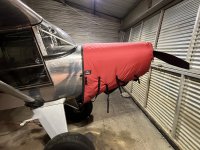
A few days ago I found out how effective my Bruce's insulated engine cover is. I flew into Marble to camp with Pat Fagan, Scott Williams and Kevin Deutcher who flew in from Arizona. I arrived 3pm and immediately installed the cover after shutting down. Weds Morning we woke up to 28 deg and a layer of frost on the planes. Just before starting up at 9am after the frost melted off, the cylinder heads were at 47 deg and the oil was 49 deg. I was very pleasantly surprised.

IMG_2119.jpg
 
Back
Top