Fuel Flow Discussion, Moved from Float Mounting

MattS

Well-known member
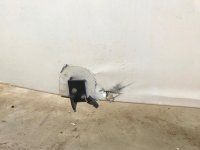
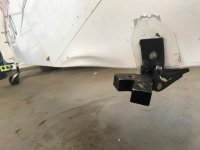
I had a hard landing after an engine failure late last year. This is a Quickbuild bearhawk and we did not reinforce any of the fuselage. We followed the suggestions of Clamar and Mark Click image for larger version  Name:	WhatsApp Image 2019-09-29 at 1.10.04 PM (4).jpeg Views:	0 Size:	338.2 KB ID:	52084 . Ripped the floats off but very little damage to the fuselage. Click image for larger version  Name:	WhatsApp Image 2020-01-17 at 8.46.26 PM (1).jpeg Views:	0 Size:	84.6 KB ID:	52086
 

Attachments

  • photo6778.jpg
    photo6778.jpg
    70.8 KB · Views: 0
Last edited:
short story; Running on "Both" without having interconnecting tanks. Pressure differential between the tanks caused fuel flow stoppage.
 
short story; Running on "Both" without having interconnecting tanks. Pressure differential between the tanks caused fuel flow stoppage.

If you dont mind its probably worth doing a post on this. It's an issue that is addressed in certified aircraft and rarely in experimental.

And since fuel related issues are the #1 experimental problem, it's worth discussing.
 
Last edited:
Matt, add me to the list of folks who would like more details on the issue you encountered. Sounds like something the entire Bearhawk community needs to better understand.
 
It's more or less exactly what he said. If you have a fuel pump and have a both setting on your fuel selector, you need to either a) never use it in both b) have a vent line running between the two tanks towards the top of the tank to equalize the pressure in the air above the fuel. I could do some math with it later to show how that happens, but that's what's happening. You can have one tank empty and the other tank completely full and not be able to get any fuel to the engine.

Every certified aircraft has this if they have a both selector. They are required to by FAR.
 
Ok, zkelley2 I admit, I don’t get it. If the fuel tank is vented through the tank caps, what would a vent line connecting both tanks do for you that the cap doesn’t already do? The only failure scenario I can think of is to have one cap vent hole plugged. If that happens the fuel won’t drain out of the tank with the plugged cap and an alternate air source would be necessary.
 
Last edited:
Only thing I'm finding has to do with Cessna 182s, 185s and their interesting venting scheme, maybe an AD for vented caps? What's the FAR that requires a cross vent between independently vented tanks?
 
The only failure scenario I can think of is to have one cap vent hole plugged. If that happens the fuel won’t drain out of the tank with the plugged cap and an alternate air source would be necessary.

If that were the case, would a fuel crossover serve to equalize the pressure? Do the kit tanks have a provision for a vent crossover?
 
I believe I read the requirement in AC43. I will try to look it up again. I was planning on return lines to the mains for my EFI so I had 1/8 NPT ports welded to the top center of the inboard edge of each tank. I am probably going to use it to cross vent the tanks.
 
I would like to understand the science here.. for me it seems that when the valve is on "both" the left tank can drain to the right tank, and vice versa. Does that not allow the fuel to cross over?
 
It wasn't in AC43, it was in a different FAA (FAA-H-8083031A page 14-10) pub describing a single engine, gravity flow fuel system with 2 wing tanks and a fuel selector valve. It shows a different diagram for high wing/fuel injected. That diagram shows header tanks and no BOTH on the fuel valve. I believe this pub is an educational pub, not regs.

High-wing aircraft with a fuel tank in each wing are common. With the tanks above the engine, gravity is used to deliver the fuel. A simple gravity feed fuel system is shown in Figure 14-12.
Figure 14-12. The gravity-feed fuel system in a single- engine high-wing aircraft is the simplest aircraft fuel system.
The space above the fuel level is vented to maintain atmospheric pressure as the tank empties. The two tanks are also vented to each other to ensure equal pressure when both tanks feed the engine. A single screened outlet on each tank feeds lines that connect to either a fuel shutoff valve or multiposition selector valve. The shutoff valve has two positions: fuel ON and fuel OFF. If installed, the selector valve provides four options: fuel shutoff to the engine; fuel feed from the right-wing tank only; fuel feed from the left fuel tank only; fuel feed to the engine from both tanks simultaneously.
 
Last edited:
Other than the little vent tidbit, there really isn't enough info on his particular fuel system to speculate what happened. It would be nice to learn something here.
 
The reg is 23.975(a)(4). It offers no discription so is not particularly helpful. If we look back to when the regs were written in blood, as they say, we can see the same requirement in CAR 3.446 but no reasoning. CAR 4a has some helpful info.

§ 4a.606 Tank installation. No fuel tank shall be
placed closer to an engine than the remote side of a
fire wall. At least one-half inch clear air space shall be
allowed between the tank and the fire wall. Spaces
adjacent to the surfaces of the tank shall be ventilated
so that fumes cannot accumulate or reach the crew or
passengers in case of leakage. If two or more tanks
have their outlets interconnected they shall be
considered as one tank and the air space in the tanks
shall also be interconnected to prevent difference in
pressure at the air vents of each tank of sufficient
magnitude to cause fuel flow between tanks.
Mechanical pump systems shall not feed from more
than one tank at a time except by special ruling from
the Administrator.


Also helpful is this NTSB finding. Note that Luscombe fuel system is essentially the same as those found on Bearhawks except that there is no unusable fuel in a Luscombe.

http://www.aopa.org/asf/ntsb/narrati...20090810X75326
 
Last edited:
So you need to have a fuel pump for this to be a thing. It does not apply to gravity feed. If you have it on both and run 1 tank dry, it will suck the air from the empty tank and not the fuel from the fuller tank. If this happened in flight you can just switch to the tank with fuel in it, but you'll need to remember to do that and know which one that is. If you're not aware of this, you might think, it's on both, so clearly it has access to all the fuel.


The relevant FAR is 23.951b - Each fuel system must be arranged so that— (1) No fuel pump can draw fuel from more than one tank at a time; or (2) There are means to prevent introducing air into the system.

Then there's the differential head pressure issue as well. Which I think you could do by installing 1 fuel cap backwards and probably sideways and possibly some extent between 90 and 0 degrees.


Here's an experiment you can do at home that is the same phenomenon. Get 2 straws and a glass of water, put both straws in your mouth, one in the glass of water and one outside the water. Suck and see how much water you get in your mouth and how much air.
 
Last edited:
The following posts are relocated from a discussion about mounting floats, to make it easier to find and discuss.
 
Here's an experiment you can do at home that is the same phenomenon. Get 2 straws and a glass of water, put both straws in your mouth, one in the glass of water and one outside the water. Suck and see how much water you get in your mouth and how much air.

Thanks for this... It seems to apply especially in a low-wing situation. But whether our system is entirely gravity or not, it is still partially gravity-fed. If the pump is forward of the fuel valve, how can it be possible for one straw to be in the air? Wouldn't tank gravity pressure provide flow through the valve and up to the pump? Or is the issue that the pump is pulling more than the gravity pressure provides? Not trying to argue, but rather just to understand how this could happen in our case.
 
Oh, this is the situation that only applies if your fuel pump is sucking fuel. We went over this already in the returnless FI thread.

In a properly constructed Bob fuel system this shouldn't be an issue, unless you're running FI with a full return. Remember that whole discussion about not over taxing the Bob systems ability to supply fuel?
 
This is an important topic and I don't want anyone to get confused. Zach and I are talking about two different failure modes. The one he is referring to does require a fuel pump for it to be an issue. The failure mode I am referring to affects both gravity feed and pumped fuel systems in the same way.

If you read the CAR4a reg I quoted and the NTSB report I linked you should have a reasonable grasp of the issue.
 
Last edited:
At least for what zkelley was referencing. The NTSB report whee linked has to do with a plugged vent cap, but I'm not sure I follow their reasoning in why one plugged vent will cause an interruption in fuel from the unencumbered tank and vent, doesn't make sense to me at least.
 
It does, if you were in prolonged uncoordinated flight you'd be "transferring" fuel from the wing high tank to the wing low one.

Just having the tanks connected at the fuel valve means they'll seek the same level and necessarily move fuel.
 
Last edited:
My head is spinning. Lets not guess or take anything for granted.

Facts....A standard Continental IO-360's engine fuel system supplies excess fuel to the engine and requires a fuel return system of some kind. In contrast, a Bendix RSA type of FI system does not return fuel.

Do we know if the accident aircraft....
-had the standard Continental fuel system installed?
-had one fuel tank empty when it crashed?
-had a tank vent plugged?
-had the tanks vented via caps or some other alternate means?
-what is the Fuel supply requirement for a Continental io-360 with a standard fuel system installation......ie how many gph does the system demand to be supplied from the tanks.
-Do we know how the fuel return system was designed on the accident aircraft?

Data communicated so far (not necessarily a fact)-
-Post #4 "Running on "Both" without having interconnecting tanks. Pressure differential between the tanks caused fuel flow stoppage."

My comments.
-I understand a pressure differential could develop if one tank vent is plugged or the cap is not aligned into the airstream-.
-I don't understand how a differential pressure that develops between two tanks when in BOTH could suck the good tank dry.
-I don't understand how a pressure differential could stop fuel from flowing from a properly vented tank that has fuel in it.
-A pressure differential could change how the fuel is returned from the engine to the tanks.
 
I am a missionary pilot here in the Amazon Basin of Brazil. I have 1100 hours TT with over half of those occurring here in Brazil (270 in an RV6, 170 in the BH on wheels, and 160 hrs in a Murphy Rebel on straight floats). As mentioned in another forum, I reported that in 2018 we mounted the BH on Clamar amphibs. I had about 10 hours total flying the newly configured plane when I had the accident. The plane is equipped with the standard BH vented fuel caps which i checked before the flight and after the accident. They were not plugged. Someone asked about one tank being empty. There was fuel in both tanks although a limited quantity in one. Could have unported a fuel line. However, this is the very reason I always felt running on Both was safer- who cares if you unport a fuel line if there is fuel in the other tank, right? Why were the quantities of fuel not more balanced when they were connected while running on Both? I did note during the flight that is is harder to stay coordinated when on these large floats. Here is a portion of the accident report as I submitted to the mission board:

7:30AM; Take-off for Apui (425 NM) for a 4.3 hour flight before re-fueling and continuing to Humaita (2.0 hours). Diverted slightly for weather but mainly stayed about the Tapajos River for the first 2.5 hours. After Jacarecanga, headed west to Apui following the TransAmazonia highway. Flight level 6,500ft.

During the flight I left the fuel selector in both. However, I noticed about 3 hours in that it was pulling more fuel from the left tank. This did not happen immediately because at one point early in the flight the left tank had more fuel.

10:30AM Switched to using just the right tank to get the fuel more balanced. No change detected in Fuel pressure or usage between “both” or “right”.

11:00AM; Switched back to using both tanks. 11:05AM; Began power-on descent for Apui.

Flight heading 265 with a tailwind so I was set-up to enter a left down wind. The runway at Apui is asphalt with many potholes. With minimal experience in landing an amphib aircraft I wanted a extended, very controlled final. However, I also wanted to do a good visual of the runway because of the poor condition of the runway.

11:25AM; Descended to 500-600ft AGL for visual inspection of the runway. After completion, I powered up (~2200 RPM) and began climbing for an extended downwind. About 2.5 miles from the runway I entered a left base. Still with power and a slow climb. After wings leveled in the left base the engine quit. No sputtering, no signal. Just 2200 rpm to nothing. Remembering I had more fuel in the right tank I switched to “right” and then hit the electric fuel pump. The engine surged once and then quit again. I did not think to look at fuel PSI or flow. Looking towards the runway I decided I couldn’t make it (a floatplane without power descends at 1000-1500 FPM). Between me and the runway were a bunch of hills, trees, and a sawmill so I did not want to land short.

Looking to the right I saw a small lake (later the owner said it was 800 meters). I decided that was my best option and turned towards it. I had already lowered the landing gear so I began retracting them and set-up for a short landing (I saw the orange light indicating the wheels were coming up but don’t remember confirming “blue”). I put in 2 notches of flaps but soon realized I had turned too soon and was too high. I continued to fly just over the lake but with too much altitude. The lake had a 150 ft dogleg that I turned left to try to use as much water available. However I ran out of water/landing area. The owner said he had lowered the water level that month to clean out some tree trunks. Therefore the bank was 10-12 feet high. I ended up hitting the bank with the floats and they started to shear off slowing me down. Around the lake was a driving path. I slid across the path and then nosed the plane into another 15-18 ft embankment.

Later when we began removing the wings we discovered that I had 10 litters in the left tank and 55.5 in the right. This does not included the limited quantity that was spilled during the removal process.

The engine was not rotating when it impacted the ground (one propeller blade is bent backwards) so there was no sudden stoppage.
 
Don't want to add to any confusion, but my RANS S-7S has NO selector valves, both tanks feed a 3 gallon header all of the time. There IS a crossover vent line that between the two tanks, plus individual vents. For whatever reason, p factor, prop blast, don't know and don't care.....the right tank ALWAYS empties first. You can tell a new S-7 pilot by him freaking out when this happens, thinking he is going to run out of fuel! Doesn't happen, ever. Nothing wrong, no clogged vents or clogged feed lines, and messing with selector valves, in our case anyway, can add complexity, weight, and expense. I use my left tanks sight gauge as my fuel gauge, when it shows empty, I then start looking at my 3 gallon header tank's sight gauge, and I've landed with less then a gallon showing (oops) and the engine ( Rotax 912) never faltered. After landing, I drained the remaining fuel out, just as a test, to see if perhaps I had more fuel then indicated. Nope, I had exactly what I thought I had in flight, 1/2 gallon. This is such an idiot proof system, also making full use of the fuel on board IF YOU CHOOSE TO, (!) that if I build another plane I'd set it up the exact same way.
 
Very sorry to hear about your accident with your new build. Must be heartbreaking.

Thanks for taking the time to write it up.
 
Thanks for this... It seems to apply especially in a low-wing situation. But whether our system is entirely gravity or not, it is still partially gravity-fed. If the pump is forward of the fuel valve, how can it be possible for one straw to be in the air? Wouldn't tank gravity pressure provide flow through the valve and up to the pump? Or is the issue that the pump is pulling more than the gravity pressure provides? Not trying to argue, but rather just to understand how this could happen in our case.

Yes, it's a much bigger issue in a low wing, but can still happen on a high wing with a pump, hence the FAR. I'd think you'd need to be in a quite high pitch attitude in our case. Also why low wing pipers don't have a both.

You can also get the pressure imbalance like John is talking about, gravity or not, and so if you're going to run both, you NEED to have a vent line between the tanks. To atmosphere does not count.
All of the Cessnas with both have vents between the tanks, but also have tank vents to atmosphere. They started doing this in the C140's. The early 140s have a L/R and no vent between them. When you get to the later 140s with a both, there's a vent. I'ts much easier to make the vent in a high wing than a low wing.
You'll also see, I think starting with the 170 POH's and I think it's even placarded on the 172 near the selector that even though they are gravity feed with tanks vented to each other, they recommend cruise flight in L or R, not both.
 
Last edited:
Eric Newton's Sample POH only mentions the following about fuel selector positions in section 2:
  • To ensure maximum fuel capacity when refueling, place the fuel selector valve in either LEFT, RIGHT or OFF position to prevent cross-feeding.
  • Takeoff and land with the fuel selector valve handle in the BOTH position.
Do we need to amend this? I've always flown in BOTH on most of the high wings I've flown and not thought much else about it. I've only switched to LEFT or RIGHT as MattS says he did on a long cross country to level the tanks.

What can we take away from this to better understand fuel selector operation? Not saying he did anything wrong. Just trying to glean a "learning moment" from this incident.
 
Last edited:
I don't know if my Maule had an interconnecting vent between the main tanks. I very rarely used the both position. With all tanks full I would run 1/2 hour on one side, 1/2 on the other, then start pumping the aux into the tank I was running on, swap sides again in another 1/2 etc. That way I would never overfill a main tank. On a long flight I would run one side dry but never landed with less than a quarter tank. This was a carburated engine with mechanical and back up electric fuel pump. Figure I will use the same scheme with the Bearhawk, only difference is AP fuel injection, and AP says don't run a tank dry.
 
Last edited:
I do not have a both position on my yet to fly patrol. I did weld in a couple bungs for a interconnecting vent between the two tanks just to have redundancy in case a cap vent got plugged, which I have had happen. It probably is not needed, but easy to do.
 
It depends on the fuel selector you install and how you build the fuel system, if it has an interconnect and if it has a pump or gravity feed. A problem I already see is most fuel selectors in the off position allow fuel to transfer between tanks, just not out the outlet port. So for fueling if you're worried about transfer, you would want the selector in R or L, not both or off. This applies to parking on an incline as well.
 
Last edited:
All the Maule's that have a both, have an interconnect. I think some of the early M4's didn't have a both. The pacer did not, but there's an STC to add a both.
 
Last edited:
Try that experiment again with the glasses above your head and straws out the bottom of the cup...

This would be an issue with a low wing, which typically don't have a both position on the tank selector. Whereas most high wings do.

See Jon's post below.
 
Last edited:
Sorry to see this crash, I know it's very disappointing and upsetting event. I hope everyone walked away unharmed. Fortunately the aircraft looks repairable.


___________________

I am concerned that this discussion could confuse builders / pilots about fundamental fuel system design principles.

For most high wing aircraft, BOTH is the safest position to fly in, because if there is fuel in the tanks you have the best chance that your engine will keep running*.

*no fuel system is foolproof.

More complex fuel systems are more hazardous, statistically speaking. Multi tank, multi pump, and fuel return systems increase the risk of fuel starvation events.

For most Bearhawk pilots BOTH is still going to be the safest option.
___________________


We need to understand the fuel system in question before making determinations about your own fuel system design.

From what I have read, there a working assumption that 'sucking air' or 'unporting a tank' was the cause, due to some venting issue. How was this determined?

A few footnotes:
  • It seems a lot of content in this thread has been re-posted from this unofficial source: https://aviation.stackexchange.com/q...-fuel-selector
  • Someone made the comment about cross-vented tanks preventing this issue. Remember that many Cessna first added the cross vent to address venting issues with the 140 and 150 fuel systems, I am not sure if this was related to fuel injection.... I don't believe those aircraft have FI.... this was before the AD requiring vented tank caps, too.
  • If a pilot does starve an injected engine of fuel (even just for a short moment by unporting a tank during a turn), the pilot may need to select throttle to mid range (50% power) otherwise the engine may not restart when fuel becomes available again, depending on the fuel system.
  • Lots of guys talk about running tanks dry as part of normal ops, this is not safe practice unless you know your fuel system. Some fuel system designs will not restart if a tank unports. Others will restart just fine and very reliably.
 
Last edited:
I am fairly certain that aircraft certified under Part 23 have to meet a certification requirement that if one tank is run dry to the point that the engine quits, the engine must restart within 5-7 seconds (time could be slightly off) – with no other action required by the pilot other than turning on the fuel boost pump and switching the fuel selector to a tank containing usable fuel. I don't know if this requirement was ever part of CAR3 or CAR4. I've tested this in my previous Commander 114, while flying with an experienced type-specific CFI. We remained well within gliding distance of the airport at all times. We made two separate flights in order to verify both tank's usable fuel quantities.

I would not, however, intentionally run the tanks dry as part of a "routine" operational procedure.

By the way - my Commander 114's tanks held about 1.5 gallons MORE than the "official" usable fuel capacity – which is quite unusual. Often – especially with bladder-type tanks – the actual capacity can be significantly less than the officially reported fuel capacities, due to "bunching" or "wrinkling" of the fuel bladder.
 
Battson said:
For most Bearhawk pilots BOTH is still going to be the safest option.
___________________

From what I have read, there a working assumption that 'sucking air' or 'unporting a tank' was the cause, due to some venting issue. How was this determined?

The point I'm trying to make is that "Both" is an unsafe position in a Bearhawk because it does not have a cross tank vent. This is the FAAs position (strict prohibition of a Both position when tank airspaces are not vented together) and I agree with them. It presents a failure that can cause fuel starvation when there is still fuel in both tanks. Specific conditions must exist which is why it rarely happens. I experienced it twice in a Bearhawk and it is my opinion that this is what caused fuel starvation on Matt's plane.

IMO, "unporting " is not what caused Matt's failure. Unporting would have caused a partial power loss but not a total shutdown.

I have a meeting with the head maintenance inspector at my local FSDO office in a couple weeks. After we finish the repairman's certificate interview I'm going to ask him about this issue in hopes that he has a way to explain it that others will understand. Obviously I'm not capable explaining it clearly.

Which post did you attempt to explain it in, Jon? I can't see it for looking.

Point taken about "unporting", I should be clearer. We are talking about a lack of adequate venting.

I am fairly sure the high risk situation relates to low wing aircraft. But I cannot imagine a situation where fuel exists in both tanks and you can't get any, with the selector on both... Unless you have two blocked vents.
EDIT - thanks for the explanations Jon and Matt, I get it now. See response below.

I would be happy to run one tank dry on the ground and see if the plane keeps running on both. Easy to test this...
 
Last edited:
Some info about Continental Fuel injection that may be of interest during this conversation.

Restart after running a tank dry is a non event. Almost immediately after selecting a tank with fuel in it the engine restarts.

The primary fuel pump is a positive displacement pump that is driven by the engine and has a reputation of almost never failing. As long as the engine is turning and there is some fuel present the engine will get fuel.

I purposely came up with a scenario that would unport a fuel line cause the pump to suck air. Because of how TCM FI works this sucking of air causes surging of the engine. Gravity is still supplying some fuel so the pump has to build up enough fuel pressure to open the cut off valve located in the fuel spider. So the valve opens, the engine revs up, the fuel pressure drops, valve closes, engine dies. This repeats until there is no more fuel or a steady flow of fuel is restored.
 
It has been a while since I tried to explain it. I did not make an attempt in this thread. It is not a simple thing to replicate. Simply running one tank dry will not simulate the failure, you have to also induce a unequal vent pressure in the tanks of sufficient difference.

I have have experience fuel starvation twice in a BH with fuel in both tanks. (Aprox 3 gal in one tank and 10 in the other.)

The thing about this that I find most incredible is that people think it isn't a thing. Like the FAA got it wrong and created some pointless rule for no reason back in the 1930s and has kept that rule for almost a 100 years.
 
I have really appreciated this forum over the years as sometimes I feel "alone" down here. My goal is to provide accurate information to the group. I am not trying to convince anyone of what happened.

Until September 29, 2019 I flew with the assumption that in a high wing plane flying in BOTH was the safest mode....similiar to what others have said here. I believe I did NOT unport a tank. I would explain it as this; flying uncoordinated caused a pressure differential between the two tanks. Instead of fuel flowing (at the selector) forward through the firewall to the engine driven pump, the pressure differential was enough to cause the fuel to flow back up to the other tank instead. Basically it overcame gravity and starved the engine. Jon told me he was able to replicate this twice. You will not be able to replicate this on the ground unless you have some way to cause a pressure difference in the tanks. Additionally this will not occur just because one tank is dry as air will not flow downhill when there is fuel in the other tank that will push it back up (when running on BOTH).

When I purchased the plane the fuel selector only had "R", "L" and "closed". I accept full responsiblity because I made a modification (installed a selector with BOTH) without doing my homework to see how this modfication would affect everything (again, I was trying to make the plane safer and made a few posts about this modification on the forum trying to make the correct decision). To me this is the rule I did not follow and paid for it:
If two or more tanks
have their outlets interconnected they shall be
considered as one tank and the air space in the tanks
shall also be interconnected to prevent difference in
pressure at the air vents of each tank of sufficient
magnitude to cause fuel flow between tanks.


Thankfully I was the only one in the plane. I was not hurt. A small seatbelt mark on my neck (install shoulder harnesses!). My daughter asked my how I felt soon after the accident. I replied "Blessed and pissed!". We are in the process of repairing the plane. If anyone would like to volunteer to come down, I am looking for some good rivet bangers. I'll throw in a free flight over the Amazon rainforest in a RV6!

OK - unless I get this wrong, the "BOTH" position can only cause this if sufficient pressure difference exists between the tanks that overpowers the suction of the pump, to such a degree that the pump cannot provide the operating pressure required by the fuel servo. Happy to be corrected here if I missed something.

The TCM FI system may be a distinguishing factor here? Or not, given the cross venting was introduced on non-FI equipped aircraft.

The Bendix (on Lycoming) system needs only a few PSI to operate correctly (cruise power), and the pump provides about 25 to 30 psi of head.

So on a Bendix system, the imbalance in venting would require over 20 psi of difference between the tanks. Perhaps over 30 psi. I am sure it's possible to get 30 psi in a fuel tank and zero pressure in the other at 130kts, with the right (wrong?) fuel venting design or with the vents installed incorrectly. You can always get a mechanical system to fail, through bad design or operation. This venting issue could equally have affected the tank you were drawing from if you were drawing L or R only...?


Noting my respect for other opinions here, I still believe that Both is safer than L or R in a Bearhawk, and I think it's the safest choice when flying, all things considered. Let's not lose sight of the other risks of fuel starvation, which are more common. I always fly on Both with no cross tank vent, and have never encountered any issue yet. I am sure there are countless other planes doing the same. So it's not something which is easy to induce.
  • This issue discussed here is a remote risk which requires other things to go wrong as well. I understand that running a tank dry by accident is a much more common cause of crash landings.
  • If you have a venting issue causing a lower pressure in one tank, then you are going to have to select a different tank to fix the issue, and whether you are selecting from Both or from L to R makes no difference. You still have to change tanks when both tanks still show fuel inside. This is not an intuitive thing to do.

Notwithstanding the above, is there some literature in the Bearhawk manuals about this risk? I believe the system calls for a Both selector?

I am happy to admit I wasn't aware of this risk. Builders installing fuel systems with a 'Both' selector need to be made aware they need to cross vent to remove the risk.
 
Last edited:
I've never experience this failure on my plane; I don't have a both position on my fuel valve. Both times it happened to me was in an O360 powered BH. It also happened to another guy in that plane after he didn't believe my warning or explination. The first time it happened to me was due to uncoordinated flight. Second time was due to a bad gasket on the fuel cap (Cub style). After I started not using both on that plane I never had the issue and neither did the next guy.

I'm not surprised Bob didn't consider it because it is such a remote possiblity for the failure to occur, the reg is so obsure few even know about it and fewer understand the reasoning behind it. Bob may not even know why this may be a concern or even that the reg exists. The only reason I found it is because I am a Luscombe guy. Luscombes have no Both position. Their fuel valve are of poor design so forever ago a guy developed an installation that put an on/off valve for each tank on both side of the cockpit and eliminated the factory valve. A placard is required prohibiting opening both valves at the same time. I had a discussion about the reasoning with some Luscombe gurus which lead me down this path of discovery. None, literally zero, of the A&Ps I've asked about this had any sort of clue about it. I really am looking forward to talking with the FAA inspector about it.

Maybe worth noting, the C206s have no BOTH position and no cross tank vent.
 
I still don't understand what happened here, but (or maybe "therefore") a question occurs to me: if you have the simplest valving of all, just "on" and "off", would your system be subject to this problem? The lines would tee together just upstream of the valve, which sounds to me the same as a "both" position, with the tee inside the valve.
 
Thanks for sharing your wisdom here, Jon, and to Matt for sharing his experience.

​​​​​​​I got educated so I am real happy.
 
Great explination Matt! Thanks for sharing your experience and for putting in words what I couldn't.

I would love to come down, help out and explore the Amazon. Too bad I suck at banging rivets😁
 
The way I understand this is that if you are running on both without a crossover vent and the pressure differential between the tanks exceeds the pressure differential between the tank and the pump inlet or the carb inlet if you are gravity fed fuel can flow back up the line to the tank with lower pressure instead of flowing to the motor. So anytime valves to both tanks were open this could happen regardless of the type of valve you are using. That is my understanding feel free to tell me I'm wrong if you disagree.
 
The way I understand this is that if you are running on both without a crossover vent and the pressure differential between the tanks exceeds the pressure differential between the tank and the pump inlet or the carb inlet if you are gravity fed fuel can flow back up the line to the tank with lower pressure instead of flowing to the motor. So anytime valves to both tanks were open this could happen regardless of the type of valve you are using. That is my understanding feel free to tell me I'm wrong if you disagree.

I think you got it, assuming I got it. Still learning.

It appears one tank must be close to empty before it can happen, then you also need a significant air pressure imbalance on each tank vent. The issue seems extremely rare / hard to provoke.
The Bearhawk design has cumulatively flown many thousands of hours without cross vents across the fleet, this is the first time it's really come to the forefront as far as I know.

The fuel injection systems need higher fuel pressure to operate, so are probably more vulnerable than a carb.

You can easily remove this risk by installing a cross vent. This does introduce the issue of full tanks cross feeding while parked on a slope, and draining out the vent.

Really good thread in my opinion. I am glad for it.
 
I have re-read most of this thread at least once. I am still trying to get my head around the failure mode being described. I can understand if one tank vent gets block, it won't feed fuel anymore. I can understand running in BOTH, if you then unport the opposite tank that is feeding, you won't get any fuel to the engine. But flying along, straight and level, coordinated, running in both, I don't understand how the tank with the blocked port would suck fuel from the other side. I can't quite get my head around it.

To my thinking, running in L or R is the same as running in BOTH with one blocked tank vent. Only one side feeds, and uncoordinated flight could unport the one tank that is feeding.

One complicating factor, like Battson said, is FI, or a fuel pump of any kind. The BH fuel system is designed to be a gravity fed system. As long as you feed the inlet of the pump by gravity alone, your good. The system is not designed to be suction drawn. Even running in L or R, each side has a fore and aft fuel line, and one will be unported in a climb or descend unless the tanks are near full. If you suck long enough eventually you could end up sucking air out of the un-ported line. There is a reserve of fuel in the length of each fore and aft line, but when that is exhausted I believe you will draw in air if the pump is being suction fed.

The stock BH fuel system seems to have a good track record of gravity feeding 180-260 hp fuel flow. Based on the fuel flow tests I have read on here, it doesn't seem like there is much headroom above that. A few of the tests seem a little marginal for the higher hp engines.

I have seen numerous diagrams of TCM FI including from the manufacturer. They show a fuel return line from the servo back to the pump inlet, and another "vapor" return from the pump to the tank, or header tank. They specifically refer to the return from the pump as "vapor", so I believe it is mostly a bleed line, although it could also return fuel occasionally (or more?). So to me, I think the TCM FI is only drawing engine feed fuel, not a large amount like EFI fuel pumps, and then returning the excess.

Matt: Where did the vapor return line terminate? One fuel tank only? Could this be a factor? You didn't mention a header tank.
 
Matt, thanks for telling us about this so we can learn from it. I’m still trying to get my head around the specifics.
I came across a C172 AD that may or may not be addressing a similar issue, from 1972. Not sure if it applies as it may only be applicable to normally aspirated engines, but it discusses certain combinations of altitude, humidity, temperature etc that allow vapor formation in the fuel lines, and makes a recommendation to run off individual tanks above 5000ft msl.

Point 1 of the summary mentions: The original fuel system has been highly reliable with no reports of any kind received for the first several years of operation.

https://support.cessna.com/custsupt/...df?as_id=36949
 
Interesting discussion. Not sure if I'll put a cross vent in yet or not.

Honestly it's sounding like just a L and R would be the easiest. Don't have to worry about uneven venting siphons or uneven slopes. No more management than I deal with today, hmm.
 
Like several others on this thread, I am struggling some with this. Seems like there is a lot of theory given here and I can appreciate the theory stuff and in a situation like this, facts may be hard to prove. I do, like others, appreciate the discussion which I have re-read, some of it multiple times. Some stuff running through my mind:

First, I cannot see how a pressure imbalance can occur with two properly installed vented fuel caps, which Matt said was the case with his failure. With the two fuel caps only a few feet apart and moving at the same speed they would be applying equal pressure (pitot pressure) to vent both tanks. If one was installed backwards then I could see unequal pressure which would be less than one PSI. At 150 kts, pitot pressure is about 15 inches H2O or about.5 psi. The one benefit that I can see with an interconnected vent would be venting redundancy. This would come with the potential cross feed problem mentioned. I wonder if something else might have caused Matts failure. Also, I see in the photos that the airplane came to rest with the left wing low. Could some fuel have flowed through the fuel valve from the right to the left tank after the accident?

I am starting to grasp how differential tank pressure might cause fuel starvation such as the Luscombe accident Jon cited. Being a gravity fed system, the head pressure feeding the carburetor is very small with only the weight of the fuel in the system above the carburetor supplying the pressure. If one tank had low pressure, thus sucking fuel from the other, the suction might be greater than the head pressure at the carburetor causing flow into the carburetor to stop. If a single tank is selected and it is not vented it would also quit feeding fuel. It would seem that a system that includes a fuel pump would be less prone to this potential problem since the sucking from a low pressure tank would have to be greater than the gravity head pressure plus whatever suction the pump provides. Any time there is suction, especially when temperatures are warm, there is potential for vapor lock causing pump to stop being fed (which I have experienced in a low wing Cherokee 140 on a hot day with auto fuel, at least that is what I think happened. No way to prove since engine ran fine after landing.)

I will certainly keep following this to determine if venting modification might be needed on our Patrol. In 150 hours so far running on both most of the time there has not been any problem. I don't like running it very low on fuel though...
 
Running some numbers I've reached the same conclusions Ed. Of course we're all just speculating, hopefully Matt will continue to update us as more becomes known. But I'm still unsure how you can get, with correctly vented and oriented caps, a pressure difference between the tanks.

I also recall some folks talking about how their tanks "pop" with changes in altitude, and that it's normal/expected. I would say that tanks popping in flight are a sign of inadequate venting.

I'm looking hard at, if not putting in a cross vent, at least an extra vent (per tank) with its pickup on the top-outboard-forward corner of the tank.
 
Jon mentioned he had two engine failure in a Bearhawk while running on “both”. I see it did not have the standard Bearhawk fuel caps. I wonder about other details of this airplane. Like, were they vented caps, any other venting, fuel system details, FI or not, anything else different than standard Bearhawk. If any of this has been given, sorry I missed it.
 
The Super Cub has several STCd fuel valves to add the both position. Each one I’m familiar with requires a cross vent. The simplest way is to tie them together at the top of the site gauge. These STCs required flow testing in all flight regimes. No both setting, no cross vent. Both setting requires a cross vent. Should tell us something. This is one of the areas that following the certified world makes good sense. FWIW I flew 942vt for 500 hrs always on both. Lots of hard slips into tight places, steep banking turns down the valleys etc. Never a problem but it is carbureted so add that to the equation.
 
The TCM fuel injection system does return a significant amount of fuel through the "vapor return". As much as 50% of the pumped fuel could be returned based on power settings. The amount of fuel pumped is determined wholly by engine RPM. The amount of fuel that reaches the fuel spider is determined by throttle and mixture settings.

None of this had anything to do with the failure which we are discussing here.
 
For technical correctness, 14 CFR 23.975 has been superseded by 14 CFR 23.2430: https://www.law.cornell.edu/cfr/text/14/23.2430

A cross vent is no longer required by the language of the regulation. The requirements now address possible adverse effects of incorrectly designed fuel vent systems 23.2430 (a)(1), (a)(3), (a)(6), and (b)(3). (b)(5) may be of note to those of us with 2700 GTOW, but I doubt anyone will go out of their way to meet that "reg" (which of course don't apply to experimental AC). I personally like the move away from dictating specific designs by regulation, let folks figure out how to avoid the undesirable outcome rather than lock them into a solution that might not be right for everyone.

In any case, a cross vent is no longer required by the "regs".
 
Last edited:
I've never heard my tanks pop.

Adding additional vents will not have any affect in regard to the failure mode which I am referring too.
 
Maybe worth noting that the NTSB did not determine what caused the vent pressure imbalance in the Luscombe wreck. They said possible a plugged vent, which they did not say they found and evidence of, or uncoordinated flight.
 
The BH I was flying had a O360 and the fuel system was built according to plans. The fuel caps were Luscombe or Atlee Dodge Cub style (half turn cap with a forward facing snorkel vent). Construction on this plane began before the kits were available so the Bob caps were not commercially available and the builder didn't have the machinery necessary to build them himself.
 
I am hesitant to talk about this much more before hearing what Bob has to say; I don't want to cause and additional confusion.

I don't think it will hurt anything to state the constraints that must be met for this failure mode to occur and perhaps that will identify why we have only seen this failure a few times in the fleet.

1. Tanks must be independently vented with no cross tank vent line. ie, tank airspaces are independent from each other.

2. The fuel valve must be in the "BOTH" position.

3. The vent pressure in one tank must be sufficiently different than the vent pressure of the other tank.

4. The fuel quantity in the tanks must be low. One tank must be below approximately 4ish gallons. How low the fuller tank must be depends on how large the vent pressure differential is.

5. The above conditions must be met and remain that way until the fuel remaining in the fuel lines downstream of the fuel valve is consumed. Example; the fuel in the carburetor bowl must be consumed before the engine stops running.

There are probably few that run sufficiently low on fuel while somehow inducing a prolonged vent pressure differential. With Bob caps a leak thought the O-rings isn't likely so you'd have to misalign the cap vent or fly uncoordinated to cause a sufficient difference in vent pressure. Or fly really really low on fuel.
 
Last edited:
If those vents are on both tanks so as to provide a bypass for unequal pressures it will. But let's not get too far in the weeds of detailed design, let's also stay away from absolute statements.
 
Jon mentioned he had two engine failure in a Bearhawk while running on “both”. I see it did not have the standard Bearhawk fuel caps. I wonder about other details of this airplane. Like, were they vented caps, any other venting, fuel system details, FI or not, anything else different than standard Bearhawk. If any of this has been given, sorry I missed it.

Another interesting side note, all the planes which have reported this issue are scratch built, and may have modifications from the basic design which we aren't aware of.
 
Additional constraint, albeit the most obvious - the tanks must be independently vented and not interconnected.
 
FWIW I flew 942vt for 500 hrs always on both. Lots of hard slips into tight places, steep banking turns down the valleys etc. Never a problem but it is carbureted so add that to the equation.

I hear that.

I have done 750hrs of the same in NJB, we are ALWAYS running on both tanks. We are often flying with little more than 30 minutes fuel and doing aggressive slips, steep turns, etc. We have bendix fuel injection.

We do always keep our tanks pretty well balanced though, I don't give it full power flying out of balance either.

Never had a problem with our tank vents either. I've flown for 45 minutes with a fuel cap off too, like STOL flying, steep turns, patterns, long cruises at high altitude - all sorts. We hardly lost any fuel at all. Flew back and recovered the misplaced cap....

I think this failure is a very remote possibility.
 
As noted above, the fuel system in the plane I flew was build according to Bob's specs. The Cub caps were the only difference. I do think Bob's caps make this failure less likely when properly installed because there orings seal well and aren't likely to leak. Replacement of the cork gasket on the Cub caps is almost a preventative maintenance item.
 
b(5) doesn't require you to jettison fuel unless you cannot make a safe landing over max landing weight. Which we know isn't the case.
 
I mean, a POH for an experimental aircraft isn't what sets any rules. They're for your own info only, or more likely the next owner.
As far as on the certified planes, you can always land overweight. It usually triggers an inspection.
At work we generally talk about landing overweight after takeoff every flight. Not normal ops, but if you're in the mindset of dumping fuel, you're in an emergency and none of it matters.
 
Of course not, and none of these "regs" apply to EAB, so there's no point in even discussing this. I just noted it exists, that'll teach me...
 
One thing that hasn't been adequately explained is how, without a malfunctioning tank vent, such a pressure differential arises. Technically, if both tank vents are working, the tanks ARE cross-vented - via the atmosphere - even if that doesn't satisfy the reg.
 
I was thinking the same thing. You said it very succinctly.

One additional thought that came to me is this: if there is significant difference in air volume in the tanks, like when one is near empty and the other is not, and there is altitude change then the tank with more air will have to vent more, either air coming in or going out, depending on increased or decreased altitude. This could create some imbalance until venting is complete. I have no idea how much this would or could be.
 
My understanding at this stage is that the cross tank venting is added for two reasons:

1. Provide alternative venting in the case of a tank vent blockage.
2. Aid dispersion in the case of a fuel line vapor lock.

If the tank vents are operational, it could perhaps be a vapor lock issue that is only presenting itself very occasionally in the right conditions.

If certain geographical areas are providing the right conditions of high ground temp, low temp at altitude, low pressure (individual fuel system intricacies) etc then it may only manifest itself in specific countries/states, and during certain times of the year.

Just another 2c worth in what is a very interesting discussion.
 
Last edited:
I think I might be starting to grasp this concept. I really want to understand it because I routinely fly down to about 10 gallons on board. And I always select both tanks.

After reading everything here, this is where I'm at: At first I thought that if there is enough pressure diff for one tank to suck the fuel out of the other and basically override the fuel pump and gravity, wouldn't it be enough to stop the fuel flow out of that tank even if the selector valve was on that tank instead of both? Maybe not. With the vent partially clogged on say the left tank, as the fuel level decreases, the air pressure in the left tank will decrease, maybe not to the point that it would stop the fuel from draining out of the tank but when you add in the right tank with the vent clear and oriented forward, the airflow might be partially pressurizing that tank. So now we have a differential. Fluids take the path of least resistance. (the one thing I understand about fluid dynamics) Usually that path is down from our tanks and into the engine, but in a rare case of the one tank being pressurized enough to be pushing fuel out and the other tank not having any significant pressure, the path of least resistance could become going down from the tank with the properly functioning tank, through the selector valve and up into the other tank. Once the fuel is flowing that direction, it would probably keep going that way and bypass the engine.

That is what I got from this discussion. I might be way off, I'm actually looking for clarification to see if I got it, I'm definitely not trying to say this is what happened.

Now I am also curious if check valves in the fuel lines just upstream from the selector valve would have the same result as a cross over vent line. It would prevent fuel from transferring so it seems like it would only be able to go to the engine where it belongs. I am not planning to add a cross over vent line because I park on slopes frequently requiring me to select L or R tank to prevent fuel from cross flowing and overflowing the downhill tank. I'm pretty sure if I had a cross vent the fuel would transfer through that in that situation.
 
  • Like
Reactions: Nev
It's looking to me like in a property constructed gravity-fed Bob system a cross vent is unnecessary because the worst-case pressure differential isn't enough to be an issue. For engine stoppage at least, you may think it's a problem it's possible to dump fuel like this. Assuming a 100kt ram air pressure of about 0.23 psi, that means at most the pressure differential between the two tanks would be on the order of just under 0.5psi.

The fuel pressure head of a minimum fuel tank is on the order of 1.2psi (aft tank outlet to selector valve). So while fuel will be pushed from the tank with positive pressure to the one with the vent issue (and you'll dump fuel overboard if your tanks are full) the air won't reach the selector valve, and this is worst case when your tanks are effectively empty. Now in systems that don't have that pressure head this can absolutely cause a problem, but for us it doesn't look like this is too much of an issue. Even less so with more fuel and slower speeds.

This is of course for a gravity-fed system, if your moving massive quantities of fuel and your pump is sucking then I wish you well with your analysis.
 
Last edited:
Rollie, I think if you put the cross-over vent at the highest point of the tank, and as far outboard as you can get it, you could avoid the "slope-transfer" effect. The fuel would naturally gravitate toward the inboard side of the uphill tank, thus away from the uphill vent. On the other hand, using a vent on the inboard side would have the opposite effect.
The Commander 114 that I used to have was a fuel-transferring demon... If you didn't place the fuel valve in the OFF position, it would transfer fuel until the tanks found a "level" point. Unfortunately, the nice, squishy trailing-link landing gear (which made for fantastic landings) allowed the now-heavier wing to sag even further as the fuel transferred. If left unattended on a slope with the fuel valve anywhere but OFF, it would transfer almost the entire 35 gallons in the uphill wing to the lower wing, which would then run out through the overflow vent. Many new Commander owners came back to their birds to find their newly-topped-off aircraft sitting in a puddle of 35 gallons of AvGas. An expensive mistake you only make once!
 
Last edited:
I have decided to use left and right and fit a two-gallon header tank, I have 3/8 fuel lines and 1/2 back from the header tank to the mains. IO540 C4B5. electrical and mechanical fuelpumps.
 
Oh and to add, an additional vent on each tank would help mitigate this possibility, but I'm not going to be installing one. I'll be going with a check valve to prevent fuel stoppage if the vented caps get plugged, ice being my concern, McMaster has some I'm looking into. The check valve won't open at the pressures we've been discussing.
 
Last edited:
I have decided to use left and right and fit a two-gallon header tank, I have 3/8 fuel lines and 1/2 back from the header tank to the mains. IO540 C4B5. electrical and mechanical fuelpumps.

It makes intuitive sense to select the fuller fuel tank when balancing fuel, which works nearly all the time. But when a system malfunctions things often stop making sense, and in this case it may be that the fullest tank has plenty of fuel, but it’s not accessible.

I wonder if a header tank will actually mask this issue rather than solve it, by providing an additional 2 gallons before the issue makes itself known.

For example, with BOTH selected, if one tank is failing to feed properly due to tank vent blockage, pressure differential, fuel line vapor lock etc, the other tank will continue feeding the header. If the selector is later switched to the fuller tank in an effort balance, the fuel feed problems from that tank will then become known shortly after changing tanks, or 2 gallons later with a header tank. It may also create a delay in getting fuel to the engine to restart, once the unobstructed tank is selected.
 
Last edited:
I am not an expert, so I am happy to be corrected....

Personally I see little benefit in a header tank with a Bendix injection system or carb system in a Bearhawk. There is plenty of risk with not having a both position on your fuel selector. There is plenty of risk with having a tank of fuel near the exhaust or in the cabin.
 
With Bendix FI or a carb, I wouldn't use a header tank either. With EFI, I wouldn't use them if I used 1/2" fuel lines. If I remember right Whee made the same choice with TCM FI.
 
Hummm....intersting.... And if we changed angle of attack, would the pressure on top of the wing change and submit a change of pressure inside of the tanks, and then would the change in the two unbalanced tanks change at different rates which might cause an unbalance? The fuller tank would change quicker....the fuller tank's pressure would go down quicker.
 
There is plenty of risk with not having a both position on your fuel selector.

What is this risk you speak of? Are you talking about having less fuel flow?

Seems to me you are either risking your tanks staying balanced and having similar head pressure on the both position or, if I'm picking up what you are laying down, less fuel flow by removing one tank.

If it were me, I'd rather risk less fuel flow on one tank. Why?

1. The system must be designed to have enough fuel flow on either tank. If you can't operate at full power with minimal fuel in one tank, then you probably need a placard to declare minimal fuel volumes and the requirement for both tanks on take off. In my mind that is a hack. If the fuel system can't flow enough fuel on one tank, then it needs to be fixed, not placarded.

2. We have heard from two different bearhawk builders that have had engine stoppage by using 'BOTH'.

3. Other builders have reported enough fuel using a single tank. (Whee obviously tested fuel flow with one tank given his lacking 'BOTH')

Here is a post:

https://bearhawkforums.com/forum/be...ion-fuel-flow-testing-results?p=1340#post1340
Results:
Brake Specific Fuel Consumption rate of .55 lbs/hr was used to determine BSFC for the 195 hp I0-375 engine installed in aircraft.
195 hp x .55 =107 lbs/hr
107/6(lbs/gal)=17.8 gal/hr max flow rate.
17.8 x 150% = 26.7 gal/hr
To measure in oz/min:
First we need gals/min= 26.7/60=.45 gal/min
Second we need ozs/min= .45x128 (oz in a gal)=57.6 oz/min at 150% flow rate.
Therefore: 26.7 gal/hr = 57.6 oz/min

Gravity feed test:
Right tank = 88 oz/min = 41.25 gal/hr
Left tank = 72 oz/min = 33.75 gal/hr
Both = 108 oz/min = 50.63 gal/hr

High pressure fuel pump test:
Both = 136 oz/min = 63.6 gal/hr

It shows that both tanks by themselves flow enough to feed an o-540 + 50%.

What I find interesting is the variation between tanks in this test. That leads me to believe that fuel line routing greatly affects fuel flow, which could account for the seemly large differences between airplanes and fuel flow numbers. This is strong evidence that using fleet statistics to determine if there is a problem is dangerous. Bearhawks are all on-off airplanes when compared to a cessna.

My $.02 on this subject is pretty simple. If people have noted engine stoppage when selecting 'BOTH', we see unbalanced fuel flow in many airplanes (which indicates different head pressures), and the FAA suggests cross venting to ensure that the top AND bottom of the tanks act as one, then I'll be putting in a cross vent. I've already taken the time to retro in a skylight, float fittings, 4-pt harnesses, floor anchors, extended baggage, and seaplane doors, what's another 2 hours to cross vent.

schu
 
What is this risk you speak of? Are you talking about having less fuel flow?

I am talking about the risk of running out of fuel in the tank you're using.

The reason the "BOTH" position was introduced, was pilots falling out of the sky with fuel left in the other tank.

Some of the most experienced pilots I know have run out of fuel in one tank, and forgotten to check fuel quantities during the limited time they had to respond. Then been forced into landing somewhere undesirable. Some ran out of fuel on short finals and fell short of the runway, just seconds to take action... Most modern POH address this by requiring the use of either fullest tank or both tanks prior to any critical flight phase. But people are not good with checklists and procedures. The safest option is leaving the selector on both at all times when in the air.

People are innately forgetful and prone to tunnel vision. If the aircraft fuel system design sets the pilot up to fail, sets a trap so to speak, then it's only a matter of time.
 
Last edited:
Makes sense. Both does make it easier to manage fuel, as long as it works.

Didn't someone test how long it took to get power back if you run a tank try? I think it was Bobby, and only a few seconds.
 
Back
Top