Heavy Wing...need help on how to proceed.

Aero_tango

Flying since Oct. 2018...
Hi,
I did my 1st flight last weekend on my 4-place and noticed a heavy wing problem (left wing). Did a second flight today, using an un-balanced fuel condition (15 gal more in the right wing), heaviness didn’t noticeably change.

I want to proceed with the washer trick under the aileron attach weldments.

Problem is, l’m reading conflicting recommendation on how to proceed.
Mark recommends to place the washer under the UPPER leg (heavy side) and Bob says under the BOTTOM leg .
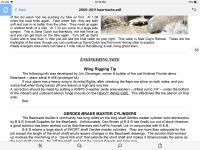
I’ve copied and paste exact wording from both sources. Bob’s recommendation is from 2006 q4 beartrack. Mark is from a forum reply, May 2014.


Mark Goldberg recommendation:
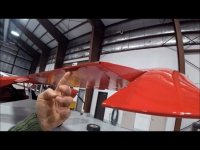
Placing 1/8" washers between the aileron attach weldments and the rear spar where it is bolted - this is what you would do on the three UPPER "legs" of the weldments. Two "legs" on the weldment where the pushrod comes out and the one on the outboard weldment. This in effect lowers the aileron a little helping "lift" the heavy wing slightly. If that isn't enough, then you can place the same 1/8" washers under the lower attach points of the weldment for the aileron on the "light" wing.

Beartrack 2006 Q4:
Bob recommendation: If your plane has a heavy wing in its initial flights, after checking the flaps are inline on both sides, and you notice that when flying hands off one aileron is high and one low. A correction should be made by putting a AN970-3 washer (wide area washer) – drilled out to 1/4” – under the bottom of the inboard and outboard aileron hinge mounts on the HEAVY WING SIDE. This effectively lifts the aileron on that side. Bob
 

Attachments

  • photo5453.png
    photo5453.png
    455.2 KB · Views: 1
  • photo5454.png
    photo5454.png
    693.7 KB · Views: 1
First, Congratulations on your completion and first flights! Huge acomplisnment!

There is a bit of conflict in those instructions.
I would reserve working with the washer solution until a little further down the road when some more data and behaviors are observed.

How heavy is heavy? Is it unsafe to fly or just troublesome irritation?
Why do you express the situation as wing is heavy
rather than one side is light?

There is a lot going on in the first flights and not all the
observations sort out as correct.

recommend that the push rod on the heavy wing be turned out 1 at the aileron.

Examine the aileron slot slot above the aileron at the wing and the fit of the aileron to the wing at the bottom leading edge. Are the right and left relationships the same?

then fly and note change?
Try 1 and 2 notches of flaps at about 80 mph.
does the feel or heavy ness change?
can you pick up the heavy wing with application of opposite rudder? If you hold the wings level at 80 mph
and release the rudder pedals what yaw does the nose display?

wings level, ball centered, what are the ailerons position
in flight?

how is the pitch? Are you ballasted to near mid CG?
at 80 trimmed for as much hands off as possible
what happens if you slowly pitch nose down to 90
and release forward pressure? Nose pitch up or continue to tuck down?

lot of questions, lot of observations, proceed slowly, small reasoned changes otherwise you will chase your
tail and undo the just done.

the alignment and rigging is critical as a1/16 thick washer will move the hinge point about 3/32.
Raising the hingepoint up, shim on the bottom should lower light wing and overall lighten the ailerons feel.
Raising the hingepoint, reduces the “camber “ of the wing therefore reduces the lift on the light wing. ie the light wing comes down....

hope this helps

Kevin
#272
 
I have always wondered with this method, doesn't this create a bending force in the bolts, which would be transferred to the spar?
 
My right wing was heavy at first. Looking at the the leading edges of the horizontal stabs, one was significantly higher than the other. Adjusting those made a difference and the right wing went from being very heavy to being slightly heavy. I've got 80 hours on the Patrol now and haven't bothered to mess with it anymore, so obviously its not all that bad.

Today while I was waiting for the oil to drain, I decided to adjust the right flap. I had been thinking that it wouldn't work because I was thinking that when the flap is up its leading edge is basically resting against the rear spar of the wing. I got to thinking that that isn't the case. The flap linkage (just forward of the flap) is against a stop when the flaps are up. (The plans call for padding around the tubing where it contacts. I used rubber hose) With that in mind I adjusted (lengthened) the rod end bearing at the right flap to lower it when the flaps are up. Hopefully I'll get to fly it for a few minutes tomorrow to see if it made a difference.
 
I corrected my heavy right wing on the Maule the same way. A quick tweak on the flap pushrod was the quickest and easiest way to fix it. Perhaps not the most efficient, but very effective given how much flap I have (Bearhawk, too).
 
Adjusting the rod end bearing push rod seems to be working. I can't say for sure because I have been flying so infrequently lately that I got it backwards on which wing was "heavy". I lowered the right flap and today I got to test it out and as soon as I got leveled off I noticed that the it wants to roll left. Then I realized that that's what it has always done and that I have been flying with my left hand pushing the stick to the right. Now its worse so I think my flap adjustment had the effect I was going for. Tomorrow I'll adjust the right flap back to where it was and adjust the left flap down a bit. I only went a turn and a half on the rod end bearing and I'm pretty sure it made a difference. My wife thought it took more force than before to keep it wings level, so I'm pretty sure I'm on the right track, just maybe going the wrong way.
 
I am working on correcting a heavy wing and want to make sure I have this right. Mark’s instructions are the ones that are correct, right? Washers go under the top legs of the hinge mounts of the heavy wing. Also, Bob recommends a -3 (3/16”) washer drilled out for the 1/4” bolt. Mark says to use a 1/8” washer but I’m not exactly sure what he means. Is that an 1/8” thick washer?

Thanks for the help.
 
Yes, washer goes on the top bolts of the heavy wing. I used a drilled out washer (1/16” thick). Maybe you have done this already but it’s worth mentioning,, check your tail again first. If one of your horizontal stabs is out the slightest bit, it will effect everything. Example, if your left wing is low,, you may have a low right horizontal stab and will take slight left rudder to Center the ball. I ended up using a transit (builders level) to Zero everything to fine tune my tail.
 
Hi Whee,
i’ve tried the washer trick under the top bolts (heavy wing side),and I didn’t get appreciable results.
I decided to remove the washer and go with a Gurney flap under the light wing.
You don’t need much, in my case, I started with a 6” strip, but that was waaaay too much. I trimmed it down to 2.5” and it works just fine. Very easy to try. Just tape it down, and when you’re satisfied, rivet it in place.
Mike
C001DE66-680D-4A48-8EDB-1044CAB69240.jpeg
 
I had a chat with Bob today and am going to try the washer trick. The wing that is light stalls first so I’m going to put the washers on that side.
 
whee did the washer trick, do the trick?

It’s been a while… I recall that the washers helped. The plane stalled both wings at the same time and heavy wing went away, at least mostly.

The reason I can’t remember for sure is my cables have stretched, both the aileron and flap cables, so I’m dealing with a heavy wing. At this point I’m not sure what is causing the heavy wing and if the washers just masked the actual issue. I’ll be re-rigging the entire plane and checking the tail-plane for straightness.
 
Whee (Jon?) is onto a critical point when dealing with a heavy LEFT wing issue that it took me way too long to learn. I have been making numerous adjustments to rod ends, flaps, etc to try to resolve the heavy left wing. I was not seeing any significant results from my adjustments. It was a quite a bit of chasing my tail.

I had just about reached a point of total rework- leveling, checking, adjusting , re-rigging, washers, etc. My first step in that plan was to check cable tension. I tightened the right wing turnbuckle 3 turns and went for a flight. Heavy left wing is almost nonexistent now in cruise. I need to make a couple of more test but may need a little tweak on my rudder trim tab to be perfect.

It is obvious now, but I wasn't seeing a change in aileron to wingtip reference position in cruise that should have resulted from my rod end adjustments. I attribute this to stretched control cable and improper tension.

just my experience and opinion. Hope helpful.
 
  • Like
Reactions: Nev
I'm glad that worked. A nice flying well rigged ship is a blessing.....yet I fail to understand the physics why it worked.
 
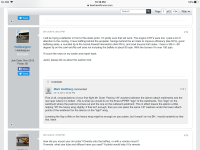
This is very interesting. My right aileron sits higher than the left aileron, and the stick sits slightly to the right also. It flies hands off like this quite happily.
I believe this indicates a heavy left wing. I've tried adjusting the flaps and this made a small difference but I didn't consider adjusting the aileron turn buckle.

Incidentally, my right elevator is a degree of two higher AOA than the left and so I had attributed the aileron issue as being caused by this. The elevator bellcranks are aligned perfectly, but not the elevators themselves. I've looked at ways to resolve this, and it can be done, but not easily.
 
Whee (Jon?) is onto a critical point when dealing with a heavy LEFT wing issue that it took me way too long to learn. I have been making numerous adjustments to rod ends, flaps, etc to try to resolve the heavy left wing. I was not seeing any significant results from my adjustments. It was a quite a bit of chasing my tail.

I had just about reached a point of total rework- leveling, checking, adjusting , re-rigging, washers, etc. My first step in that plan was to check cable tension. I tightened the right wing turnbuckle 3 turns and went for a flight. Heavy left wing is almost nonexistent now in cruise. I need to make a couple of more test but may need a little tweak on my rudder trim tab to be perfect.

It is obvious now, but I wasn't seeing a change in aileron to wingtip reference position in cruise that should have resulted from my rod end adjustments. I attribute this to stretched control cable and improper tension.

just my experience and opinion. Hope helpful.

This has been my experience too, cable tension being too high (30lbs or greater on primary for ailerons) masks other issues and prevents proper rigging.
 
This is very interesting. My right aileron sits higher than the left aileron, and the stick sits slightly to the right also. It flies hands off like this quite happily.
I believe this indicates a heavy left wing. I've tried adjusting the flaps and this made a small difference but I didn't consider adjusting the aileron turn buckle.

Incidentally, my right elevator is a degree of two higher AOA than the left and so I had attributed the aileron issue as being caused by this. The elevator bellcranks are aligned perfectly, but not the elevators themselves. I've looked at ways to resolve this, and it can be done, but not easily.

This can also be a sign of rudder imbalance. I believe one needs to trim the rudder and aileron together, as each can affect the other. When you change one axis - you will have to change the other a smaller amount.

I like using metal trim tabs which are easy to bend, as many repeated adjustments are almost always required to fine tune the ship, to the point it's totally hands off.
 
This can also be a sign of rudder imbalance.

I was trying again today to correct for this. I tried John Bickhams idea of tightening the aileron turnbarrel on my right wing. This didn't seem to help and actually seemed to make it worse (sorry John) but I wondered if I had done it the opposite way so now I've reversed it and will test it on the next flight.

Regarding the rudder, would this not show up as a skid - ball off center ? I'm currently able to fly with the ball completely centered, and wings level, hands off. But the right aileron sits higher (more reflexed) and the stick slightly right too.

Any advice or ideas gratefully considered.
 
If an aircraft flies straight hands off then It seems to me like you describe a well rigged aircraft. I wonder if the stick is slightly off because the right and left aileron cables have a very slight difference in there length. Would the stick not center up if you lengthen the right aileron cable and shorten the left an equal amount so no change in cable tension takes place?

This is the internet, beware. I am not an experience rigger, I dont understand why John B's straightened up, and what I wrote is based on theory....which can be very different than bahavoir in the laboratory.
 
Last edited:
It's as if it has been rigged perfectly on the ground, except when in flight in order to fly wings level, the stick is very slightly to the right, and the right aileron is slightly raised. I would have thought it could be corrected with the flaps - and some of it was. I might revisit the flaps tomorrow, but I think I've now got them set perfectly.
 
If an aircraft flies straight hands off then It seems to me like you describe a well rigged aircraft

It seems like it should work that way, doesn't it?? I was bamboozled by this assumption for the longest time, years.

The sum of forces just need to balance each other out, for the aircraft to fly hands off and in balance. However, flying hands off doesn't mean it's reached peak aerodynamic efficiency or is rigged correctly.

For a simple example, I can rig my horizontal stabilizers out of square and correct the imbalance with trim tabs on the rudder and ailerons. That does work. The plane will fly hands off and straight / level / in balance. However, I am flying a very draggy aircraft, and it could easily be worth 2 or 3 knots at the speeds we fly. Also, the forces will only balance perfectly at one airspeed (normally we trim for cruise). At any other airspeed, there would be a slight heavy wing or slight out of balance.

Supposing all that happened, I may not realise I had a problem for years, until I started measuring things during a repair.... ;)

I've yet to see a comprehensive write up or video on how to rig an aircraft - so I am still learning, however I have learnt a few things the hard way. I can say for sure that flying hands off and ball centre does not guarantee that the aircraft is rigged correctly, it may not be.
 
So true Battson, and I would also say that straight and level flight is a balance of things. The engine and prop make left turning tendencies. We correct those with an offset fin and other aerodyamic and mechanical measures. If the plane goes faster, the aerodynamic factors become more effective. The opposite is true if we slow down. If the engine makes more power, the left turning is greater, but if the engine makes less power, the left turning is less. Similar things happen in pitch, with the CG being forward of the center of lift, the airfoil having a pitching moment, and the horizontal stabilizer applying force downward. CG changes and speed changes both stir up the balance between those factors. If you really want to dial in a perfect balance, it will only be at one condition of engine output, cg, gross weight, and speed, unless you have an in-flight adjustment as we do in pitch. Everything else is a compromise.
 
Wouldn’t it be awesome to know what speed, or other metric, to aim for when considering optimum rigging. I know my airplane has some rigging inefficiencies but I’ve not been successful in correcting them in the past and I’m not convinced I can achieve better than I currently have. I also don’t want to make it worse so I do nothing.

I think of the stock 85hp Luscombe that held a speed record in the early 50s at 124mph and the C180 that could cruise at over 200mph. Those airplanes must have had optimized rigging and I’d like to know how they got there.
 
whee;n71645 I think of the stock 85hp Luscombe that held a speed record in the early 50s at 124mph and the C180 that could cruise at over 200mph. Those airplanes must have had optimized rigging and I’d like to know how they got there. [/QUOTE said:
Perhaps optimized for those conditions, may have been miss rigged for cruise or low-end performance.
 
Note - Although the aircraft was flying wings level, ball centered, we discovered later that the heading was changing. If I flew with the heading fixed, the ball was off center. It's called a steady heading side slip.
 
I wanted to add how we addressed this issue (similar to what others did) and some other information about it that I discovered while resolving it.

In my case, the aircraft flew wings level but with the right aileron slightly raised. This was the first indication of a small rigging issue. Over several weeks I re-rigged the whole aircraft several times to ensure everything else was fine. Kev D (post #2 on page 1) was a huge help.

Symptoms
The symptoms in my case were:

- one aileron higher than the other in wings level flight - slight roll input required.
- wings level, ball centered, the heading would slowly change.
- wings level, fixed heading, the ball would be off center indicating a steady heading side-slip​​.
- when refueling it often took a lot more fuel to fill one tank than the other. Fuel was either transferring between tanks, or burning more from one tank.
- at the initial weight and balance one wheel weight was 12 lbs heavier than the other (heavy wing).

Cause
In hindsight I realize the cause of the whole issue was probably that I installed the magnetometer and landing light both in the left wing, to make use of the same cable conduit. The combined weight is around 2 lbs on a long arm. This also indicated a 12 lb higher weight on the left wheel (short arm)when we weighed the aircraft. (I didn't understand the significance until much later). It appears that the slight roll input required to counter the heavier wing is also creating a yaw (continuous adverse yaw) due to the increased aileron drag, resulting in the side slip condition.​

Fix
I installed washers under the "light" wing as Kevin suggested and this helped, but didn't completely solve the issue. Kev mentions HERE that using washers raise the hinge line reduces the camber of the wing.

Next, we adjusted the flap pushrods (acting as ailerons in the retracted position) to counter the slight tendency to roll left. We managed to balance it out with the rigging and mostly solved the issue. I plan to also try balancing the wings with a small counter weight to remove the heavy wing altogether. If I was building again I would distribute items evenly between the wings to avoid the heavy wing issue altogether. It was a real head-scratcher at the time and took a number of weeks to resolve.​
 
Last edited:
Interesting about the heavy wing. It has been my plan all along to put my magnetometer in the right wing to try to have more balance with the pitot system in the left wing. I will also have a camera power supply box in the right wing to power a strut mounted camera. Yes I hate camera batteries. I am hoping things balance out. I am just a bit OCD about things so for once maybe it is working in my favor
 
I put everything in the right wing as well, hoping to balance out my not insignificant buttocks in the left seat.
 
I didn't take that into consideration and will probably have a heavy wing.  Maybe I'll put a pound or two ballast in the lighter wing if the scales show things are all kitty-wompus.
 
If I did it again I'd either balance them evenly, or put the same components in the right wing instead of the left to offset my own weight when solo. Anyway, hopefully posting here saves someone else the same issue or at least makes the trouble-shooting and fixing much quicker.
 
I also had a heavy wing. The correction is adjust both aileron bracket on the light wing by means of a single washer under each bracket mount to wing spar raising the aileron very slightly on the light wing.. I am going by old memory but it works in other words adjust as necessary ! Stinger
 
Back
Top