Thoughts on "less expensive" hardware?

NDflyer

Companion QB #19
As I am going through the lists and buying all the hardware and I am trying to find good value. If I can save a little money I will. However, I am not looking to cut any corners on items used to build an airplane. My question is more whether there is any difference at all with some of these parts.

Best example I have found is nut plates. Less than 1/2 the price from Pegasus compared to Spruce. Are they not the exact same thing? How can I know?

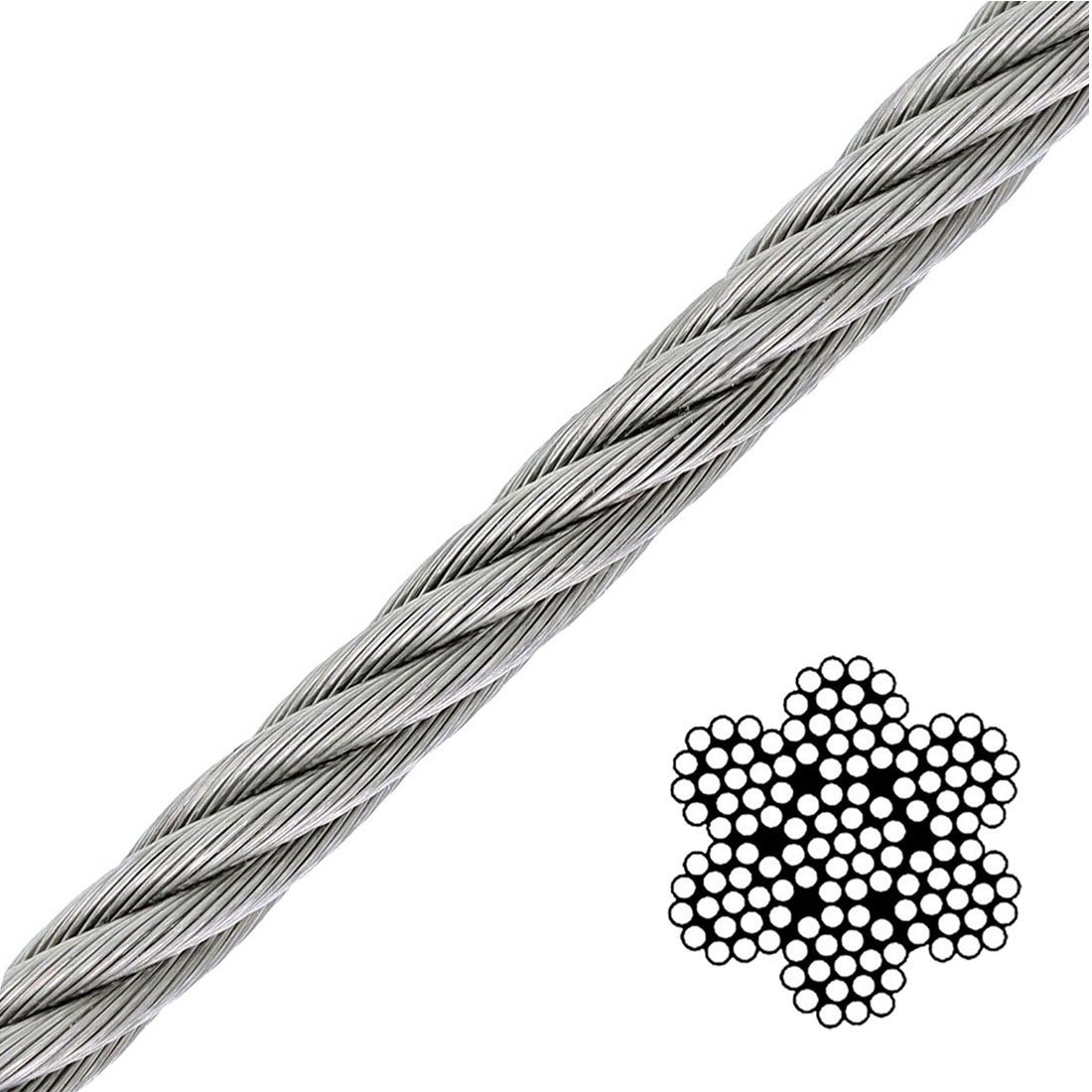
Also 1/8" control cable. I know this is especially not a place to cheap out, but how can I know if it is the exact same thing? 10% the price compared to Spruce!

Any thoughts on the matter or tips on finding value when buying hardware, please share!
 
Nutplates from Pegasus are great. Not sure on the specs for the rigging wire, but specs are specs. Pegasus is where I bought all my Teflon lined stainless steel braided fuel hoses and screw on AN hardware. This stuff was not cheap, but incredibly easy to work with and I chose to spend my money on the fuel system. Ordered a lot of screws and stuff from McMaster Carr. Their shipping is very fast, and they have nearly everything, but you do have to pay attention to the prices. Some things are oddly priced.

I talked with the Garmin guys at Oshkosh and found that JRready stuff is excellent. Their game is making Mil Spec hardware, and their crimp, butt connectors are invaluable for all your wiring needs.
 
The nut plates and rivets to install them from Pegasus are Military Spec. (Ms21047, and NAS 1097 rivets) That 7x19 galvanized cable that your supplier offers has the same mil spec standards as the Spruce offering.
 
Nutplates from Pegasus are great. Not sure on the specs for the rigging wire, but specs are specs. Pegasus is where I bought all my Teflon lined stainless steel braided fuel hoses and screw on AN hardware. This stuff was not cheap, but incredibly easy to work with and I chose to spend my money on the fuel system. Ordered a lot of screws and stuff from McMaster Carr. Their shipping is very fast, and they have nearly everything, but you do have to pay attention to the prices. Some things are oddly priced.

I talked with the Garmin guys at Oshkosh and found that JRready stuff is excellent. Their game is making Mil Spec hardware, and their crimp, butt connectors are invaluable for all your wiring needs.

Just curious, what part of the fuel system did you use those lines in, and how heavy are they?
 
When I built our first plane I spent a lot of time scrounging for parts because I didn't have much money. There is no way I would get into this hobby today if I was making the money I did back then, and honestly I'm not sure I'd get into it now even making 10 times as much. If you are sure the spec is right, then theoretically it shouldn't matter where you get supplies. Naturally the problem is that we aren't always sure the spec is right.

Risk is likelihood x consequence. We can reduce our risk by focusing on the high likelihood and high consequence items. For example, the race car supply chain is rich with AN-style fittings. You can tell by holding them in your hand that many of these fittings are not the same as the ones you get at Spruce. I use a single fitting where the fuel line passes through the firewall. We know how it's going to go if that fitting breaks- let's just say it's high consequence. I reduce risk by using a steel fitting there, and by sourcing from an aircraft supply chain, or at least by ensuring that it looks and feels like a genuine part. If you have held enough of the fittings to feel like you can make that assessment, then that gives you some potential supply chain flexibility. In this case I'm mitigating the high consequence by hopefully lowering the likelihood. Spruce could theoretically end up with counterfeit parts, and at times I'm sure they have, but they are accustomed to dealing with safety-critical parts and I think they are more supply chain aware. If I'm sourcing from a place that is less worried about origin, then I know I'm taking on some extra risk there.

I also like the Pegasus brake lines, and I consider them to be a reputable place. I would trust their lines above those that I would make by myself, because I don't have any way to pressure test them. I have sourced non-aviation race fittings at times because there is no aviation fitting that does the job. Buying AN bolts from them is moot in my experience, because Spruce is usually cheaper. In all cases that I can think of, nutplates are a really low consequence item, with very wide swings in price. If one fails, it's probably a maintenance hours cost and not a loss of life cost. I think there is also not really a supply chain for spec-looking nutplates, unlike the rich supply chain for spec-looking AN fittings. So if I saw a bag of 100 on ebay and the price was a lot less, I'd buy them, inspect them, and use them unless they looked at all questionable.

For control cable, the consequence is high, but you can test them. Make up a short piece and see how many pounds it takes to break it, and where it breaks. As a bonus, you'll also be testing your termination technique. Just be sure it is exactly the same cable, because there are a lot of products that are 1/8" steel cable but many different strand configurations and lubricants.

For electrical wire, I only use stamped mil-spec wire and name-brand PIDG crimp terminials for anything 10 and below (or mil-spec pins in those instances). I use welding cables for the larger sizes because I think they are superior to aviation wire for their flexibility. The risk of insulation burning (consequence) is always a possibility, but by having a more flexible cable, I believe I can build a more robust system and reduce the likelihood of a problem. So in that case the better product is cheaper, but I'd still use it even if it was more expensive.

The final thought is the time factor. Back when I purchased the transponder for our first plane, I spent years watching ebay auctions and VAF listings. Even if that time was only worth a dollar an hour, that was probably a $3000 transponder by the time I got it. It depends on how much you enjoy spending your time shopping for a good deal, but it's easy to waste a lot of time that could be used doing other things.
 
I hate to say it but given the total cost to build a Bearhawk in 2026 I'm not sure it's worth even thinking about the cost of hardware. A quick look at the BearhawkAircraft site shows that a more or less standard configuration 4 place kit with a new engine costs ~$275,000. Even a $5000 savings on hardware represents less than 2% of the cost of the kit and parts. I would say that if you enjoy the research necessary to identity the highest quality hardware, buy the best you can find regardless of the price. If you don't like it, stick with traditional aircraft grade sources/vendors and spend your time on something else.
 
Just curious, what part of the fuel system did you use those lines in, and how heavy are they?
I used those lines from halfway up the rear doorpost to the aft wing connection. And the entire run from the forward wing connection down the front post to the combiner T. Then all the lines from there to fuel pumps under the floorboards. I just weighed a 12' piece of 3/8" line and it weighed 22oz.
 
When I built our first plane I spent a lot of time scrounging for parts because I didn't have much money. There is no way I would get into this hobby today if I was making the money I did back then, and honestly I'm not sure I'd get into it now even making 10 times as much. If you are sure the spec is right, then theoretically it shouldn't matter where you get supplies. Naturally the problem is that we aren't always sure the spec is right.

Risk is likelihood x consequence. We can reduce our risk by focusing on the high likelihood and high consequence items. For example, the race car supply chain is rich with AN-style fittings. You can tell by holding them in your hand that many of these fittings are not the same as the ones you get at Spruce. I use a single fitting where the fuel line passes through the firewall. We know how it's going to go if that fitting breaks- let's just say it's high consequence. I reduce risk by using a steel fitting there, and by sourcing from an aircraft supply chain, or at least by ensuring that it looks and feels like a genuine part. If you have held enough of the fittings to feel like you can make that assessment, then that gives you some potential supply chain flexibility. In this case I'm mitigating the high consequence by hopefully lowering the likelihood. Spruce could theoretically end up with counterfeit parts, and at times I'm sure they have, but they are accustomed to dealing with safety-critical parts and I think they are more supply chain aware. If I'm sourcing from a place that is less worried about origin, then I know I'm taking on some extra risk there.

I also like the Pegasus brake lines, and I consider them to be a reputable place. I would trust their lines above those that I would make by myself, because I don't have any way to pressure test them. I have sourced non-aviation race fittings at times because there is no aviation fitting that does the job. Buying AN bolts from them is moot in my experience, because Spruce is usually cheaper. In all cases that I can think of, nutplates are a really low consequence item, with very wide swings in price. If one fails, it's probably a maintenance hours cost and not a loss of life cost. I think there is also not really a supply chain for spec-looking nutplates, unlike the rich supply chain for spec-looking AN fittings. So if I saw a bag of 100 on ebay and the price was a lot less, I'd buy them, inspect them, and use them unless they looked at all questionable.

For control cable, the consequence is high, but you can test them. Make up a short piece and see how many pounds it takes to break it, and where it breaks. As a bonus, you'll also be testing your termination technique. Just be sure it is exactly the same cable, because there are a lot of products that are 1/8" steel cable but many different strand configurations and lubricants.

For electrical wire, I only use stamped mil-spec wire and name-brand PIDG crimp terminials for anything 10 and below (or mil-spec pins in those instances). I use welding cables for the larger sizes because I think they are superior to aviation wire for their flexibility. The risk of insulation burning (consequence) is always a possibility, but by having a more flexible cable, I believe I can build a more robust system and reduce the likelihood of a problem. So in that case the better product is cheaper, but I'd still use it even if it was more expensive.

The final thought is the time factor. Back when I purchased the transponder for our first plane, I spent years watching ebay auctions and VAF listings. Even if that time was only worth a dollar an hour, that was probably a $3000 transponder by the time I got it. It depends on how much you enjoy spending your time shopping for a good deal, but it's easy to waste a lot of time that could be used doing other things.

Thank you for taking the time to write this thoughtful response. Good advice here that I will be referencing back to as I build.
 
I hate to say it but given the total cost to build a Bearhawk in 2026 I'm not sure it's worth even thinking about the cost of hardware. A quick look at the BearhawkAircraft site shows that a more or less standard configuration 4 place kit with a new engine costs ~$275,000. Even a $5000 savings on hardware represents less than 2% of the cost of the kit and parts. I would say that if you enjoy the research necessary to identity the highest quality hardware, buy the best you can find regardless of the price. If you don't like it, stick with traditional aircraft grade sources/vendors and spend your time on something else.
I totally get what you are saying, but I can't let myself fall into the mentality of price doesn't matter. I feel like there are so many things to purchase that this could get out of hand. And to me $200 is still $200, but I definitely don't want to compromise safety to save a few bucks.
I can't say I like doing the research, but it is something I can do while on break at my job. So that is where I can utilize my time ordering parts, reading build logs, etc.
 
The final thought is the time factor. Back when I purchased the transponder for our first plane, I spent years watching ebay auctions and VAF listings. Even if that time was only worth a dollar an hour, that was probably a $3000 transponder by the time I got it. It depends on how much you enjoy spending your time shopping for a good deal, but it's easy to waste a lot of time that could be used doing other things.
... and then your cheap Transponder breaks early, because it was a cheaper used part, so you have to replace - leading to a higher overall cost than just getting a good one up front. That's what happened to me. Same thing happened with the ELT, antenna was cheap - broke and open circuited - and that damaged the ELT, costing thousands to replace, would be better to get a good antenna...

Saving money up front is often not a real saving, often you defer the cost until later.

As you say - you cannot cut corners on the hardware which holds the plane together. In fact, once the hardware is used, it's best to throw every bolt away, after you remove it for any reason. Reusing hardware often leads to failure, I have seen this happen many times now. The hardware is the cheapest parts of a structure (and system) which keeps you alive. Same goes for fuel line, control cable, all core systems. They are safety critical, failure will almost certainly result in damage, greater financial loss than your savings, and probable harm.

Throw away used bolts and replace them, if they have any kind of structural function.

Make sure the hardware is always up to spec., and from a reputable supplier so you can trust the spec.
 
I like Hardware. Hardware education is fun. Your Questuion is
I am not looking to cut any corners on items used to build an airplane........is any difference at all with some of these parts.
No. There is not any difference in these parts. Parts you refen ced had identical mil spec numbers...they are Mil Spec hardware. Hardware made in accordance with a Military Specification and the identical Mil Spec number shows this. Mil-spec hardware is aviation grade.

In order to spool up on Hardware Education, I cannot stress the importance of having on your workbench the latest catalog from Genuine Aircraft Hardware (GAH). Call them. Kenna, Tamera, or Karla will probably answer without a selecting any extension or a recording. 888-247-2738 Skip there website. But if you must......
https://www.gen-aircraft-hardware.com/

The GAH catalog is like the McMaster Carr hardware store website. It has all the drawing, all the notes, all the specs of all the mil-spec hardware. It is your hardware textbook. Then you can use any supplier you want to shop. But buy some stuff from them for they gave you the textbook for free.

Mil-Spec hardware prices very from various suppliers. Aircraft Spruce and Genuine Aircraft Hardware typically supply Mil-Spec hardware. McMaster-Carr it but it will be mixed up with hardware is not Mil-Spec. Like they sell both in rubber Grommets, I have both and Non-mil spec grommets feel cheap.

I found shipping cost to be the controlling factor. In the end I almost always just put what I needed onto the Spruce order. Shopping showed they were competitive 75% of the time.
 
You mentioned nutplates. I did a lot of searching and oddly enough, Textron had the lowest prices. Textron, owner of Beechcraft, Cessna, etc. I even received an 8130 form for each and every nutplate I ordered. I ordered hundreds. I paid more for shipping the documentation than the parts.

It pays to shop around. genuine Aircraft Hardware can sometimes be much lower cost, but not always. You have to call. Pegasus and Summit racing are also great choices as long as you buy the mil spec parts. Their brake lines, if you order the standard ones, are vastly cheaper than others.

For me, the hunt for value is just part of the homebuilding process. Enjoy it.
 
Back
Top