Why no flaps?

Razncain

Member
As good as it is at a landing speed of 30mph listed, surely others have wondered too, why not put flaps on it, just to see how much lower it could have went. I know it’s simpler, but as homebuilders, we just can’t leave well enough alone, so are others considering building this plane with flaps? I imagine Bob has explained his reasoning behind this somewhere, but I haven’t found him discussing this just yet.
 
Thanks, David. Just a swag, but from flap handle to the necessary components getting it to the flap itself would be perhaps 10-15lbs. If that’s what it would be for another 5-7 mph lower landing speed, or whatever it may be, I wouldn’t mind this weight penalty. I also believe the wing flap area itself, by taking place of a part of the main wing would almost be a wash in that area.
 
(Untitled)

I think it was a matter of cost-benefit analysis. He saved weight and build complexity, and ended up with a landing speed that was still slower than any of his other airplanes by a significant margin. He could tell you exactly how many pounds he saved, and don't quote me for sure, but 30 pounds comes to mind for some reason.
 
I appreciate the feedback. Okay, Jared, I won’t quote you, but if it’s 30lbs, I better get at least 7mph off of the stall speed. I guess I’m going to have to talk to Bob, and see what he says.

I’m ready to go with a Bearhawk, just having trouble figuring out which one right now. Leaning towards LSA, but probably will put it in the EAB category. I’ll be glad when I decide, so I can get on with it.
 
I think it's time well-spent to make sure you choose the right project. I spoke with Bob a week or so ago and he was just about to take his LSA to Idaho for a few weeks. If you have trouble reaching him, that might be why.
 
I’m ready to go with a Bearhawk, just having trouble figuring out which one right now. Leaning towards LSA, but probably will put it in the EAB category. I’ll be glad when I decide, so I can get on with it.
If you're thinking of building the LSA and certifying to 1,500 lbs and want flaps, then I can't think of any reason not to build the Patrol.

Just my $.02.

Patrick
 
Mainly because of the smaller traditional engine choices I could use on the LSA, but wouldn’t work for the Patrol since the minimum it says one could use on it is the 115HP. I suppose one engine that might be flexible for both planes would be the IO-233. I’ve already got me a fast plane which I’ll keep, but at 8gph, kind of want a gas sipper this time around. Mainly wanting it for just STOL though, and getting to locations besides airports. I’ll figure it all out eventually.
 
I think, or at least hope it is about half that figure. For comparison the wingspan of the RV-9 is 28’ (BH LSA 34’) and the builder of a 9 weighed his wings and it came in at 55lbs each w/o fuel tanks, flaps and ailerons. With those attached, he estimated 80+ without fiberglass wing tips installed, and I’m sure this would be without paint also.

http://www.n2prise.org/rv9a014.htm
 
Last edited:
Here's a video interview with Bob about the LSA. He starts talking about the flaps around 5:47. He mentions that flaps would add "about 20 lbs" of weight and discusses some other reasons the LSA doesn't have flaps.

Wayne Packard
Kit Building 4-Place
Plans # 850
Fallbrook, CA
 
Wayne, thanks, that's what I've been looking for. Here Bob answers the right questions, unlike the video on youtube that was done at Oshkosh. He covered everything that I had on my mind and more, so sold me. For others that want to go directly to the video that Wayne recommended this will take you right to it:

http://www.eaavideo.org/video.aspx?v=3418272292001

For those that that don’t want have time for it, here is the reasons he went with this airfoil and why no flaps, but anyone with any interest in this plane at all, should make time to watch all of it. A little more info on the airfoil:

The airfoil is a Ribblet 30-6135.

The 30 is for the series of airfoil

The 6 is 6% camber

The 135 is 13.5% thickness

For flaps, Bob addresses a lot of ground here of why there are not used. Points primarily are:

Flaps would cause interference drag whet the flap meets the wing. Add another 20lbs. More complex and time consuming.

He said this plane was designed to be a slipper. He gave it plenty of rudder, and with the 6% camber on the wing, when you get it down, you’ll get the drag you need down low, and with tip losses and induced drag, you’ll be down plenty quick. The guy he took a ride in obviously was impressed with how quick and short of an area Bob needed, and must have sold him on the idea because he was ready to trade in his other popular plane and start on this one, but he was already further along with it. He said he wished he had known about this plane earlier.

That video covers a lot more of area in detail that was just for those two things I was most curious about. He said Harry Ribblet has often consulted him, advising him what he thought would be best, and he obviously took a lot of his suggestions.

This plane suits me just fine because I do just want something more simple, and a gas sipper that can chug along at 4gph sipping auto gas by choosing the right engine.

Wayne, thanks again,

John
 
The '30' of the 30-613.5 translates to the thickest part if the airfoil will be be 30% of the cord in from the leading edge. The thickest point of the airfoil will be 13.5% of the cord length.
 
Thanks, I thought the 30 number probably could use more clarification, I was writing down bits and pieces of what Bob was saying, without fully understanding all he was referencing at the time, and don't recall him saying much about the first two numbers. Definitely want to look and understand numbers more of what they represent on wings.
 
I posted the following on another thread in reference to why the Patrol outperforms the CUB by a wide margin:

I've been doing a lot of research on the airfoil for the Patrol lately. Basically I'm trying to lay out the Patrol airfoil in AutoCAD in order to make the rib forms on the CNC as well as cut out the ribs themselves. Interesting information can be found about the Harry Riblett Airfoils, which Bob Barrows used a modified version of for the Patrol (Ribblet GA 30-413.5).
I'm not an airfoil designer/expert nor an aeronautical engineer, but I play those parts in my dreams. That being said, I think the one major item you can point to as why the Patrol is better performing than the Cub is the Ribbett Airfoil design on the Patrol over the Clark Y on the CUB.

I've recently purchased and have read Harry Riblett's Book "GA Airfoils - A catalogue of airfoils for general aviation use." It's actually a very educational read and has a tremendous amount of information pertaining to the various airfoils that have been used over the years based on NACA and NASA research, and their short comings. I recommend this book to anyone building homebuilt airplanes. Harry Riblett redesigned the better airfoils from those series into what is now known as Riblett GA Airfoils. Many coffee breaks and naps in between chapters. Zzz…would love it. There is a small reference to the 4212 airfoil that is used on the Bearhawk 4-Place as well as the Clark Y. There is also in the book a numerical catalogue of the 98 various GA airfoils listed in station, camber, and ordinates to plot out the airfoils. Harry Riblett left to anyone who wants to read it, everything needed to create the GA airfoils for any wing cord size by simple mathematical equations. Amazing stuff!.

In addition to airfoil design, Mark Goldberg stated "the aluminum skinned wing will outperform the fabric wing."

This is also mentioned in Harry Riblett's book where the aluminum skinned wing holds the correct and true airfoil better than the fabric. Attached is the page from Harry Riblett's book with the stations, and ordinates for the 30-612, 30-615, and the 30-618 airfoils. In order to plot out the 30-613.5 for the Bearhawk LSA, you need to scale down from the 30-615 and use Ord and GA-6 columns to create the new 30-613.5 airfoil.


View attachment 30-615.pdf
 
Last edited:
The aluminium wing gives you a better "achieved" aerofoil, as compared to the "designed" aerofoil.

That does not consider is the whole picture though. The weight difference is almost certainly a more significant factor in the opposite sense?

Is there empirical evidence that the Patrol is superior to a Super Cub??

Also I read the Super Cub has a Super Cub USA 35B airfoil, is that different to the Clark Y?
 
Last edited:
Further to my last post, I found this comparison on kitplanes:

http://www.kitplanes.com/issues/29_3...n_20375-1.html
cub-table.jpg

cub-cost-table.jpg


Maybe I should be posting in the Patrol section...
 
I couldn't state what empirical evidence this is or is not available. The conversation was about some Alaska CUB pilots not believing the Patrol has similar STOL capabilities yet it can fly 40MPH faster than the cub. My point is that a large part of this, is a superior wing on the Patrol.
 
John, thanks for the time you put in your post, good stuff. I went looking for Ribblett’s book you recommended at Amazon, and unfortunately it is out of print. I’ll keep an eye out for it elsewhere, sometimes booksellers at e-bay sell out of print books.

Battson, SuperCubs are great planes, would be proud to own either one, but engines being equal, seems like the Patrol has considerably better cruise speeds. Definitely got to love Mackey’s SQ2, amazing what he can do with his plane. Probably my favorite video of STOL aircraft. If the prices of their kits ever come down to earth, they would get another look from me, but I’m sure that isn’t going to happen. http://www.youtube.com/watch?v=ct2fNFc8AxY
 
Last edited:
I downloaded a copy of the book from www.scribd.com. I paid the $8 for month's subscription and downloaded this book plus all the referenced material in Harry's book that I could find there. A wealth of information.
 
Personally I wouldn’t change anything on LSA as it is designed. The LSA doesn’t need flaps. Flaps add weight, complexity and build time. Bob flew his LSA at the Oshkosh STOL competition competing with airplanes build just for that. Take off roll in the LSA was 90 feet and landing was 140 feet. I doubt flaps would improve those numbers by much. Last month Bob was flying around the NE in his LSA with the Ohio Bush Pilots. The LSA out flew the super cubs with better STOL performance and he had to power back (slow down) so they could keep up with him flying cross country. I like the "keep it simple" concept of the LSA as is.
 
Know this is a fairly old thread but wanted to throw out another thought on the "Superiority" of the LSA/Patrol to the SuperCub. A few folks were comparing the performance difference to just the differences between the airfoils. My suspicion is the choices Bob made with the wing CONSTRUCTION goes alot more to accounting for the improvement in cruise speed (or lower power required for a given cruise speed). His choice of an aluminum wing that could handle torsion loads without needing an aft strut...a rigid enough lift strut that didn't require jury struts..keeping the aileron controls IN the wing instead of hanging in the breeze ala Supercub...the aileron hinges not hanging under the wing...etc. etc. All of this added up to greatly reduced parasitic drag. While the nice Riblett airfoil should get some credit for a reduction in induced drag...parasitic drag was the MAJOR improvement by Bob.

Way back in the 70's Jim Bede wrote a series of articles on design for Sport Aviation magazine that had great info on the benefits of removing parasitic drag. Bob has incorporated about 75% of the things Bede mentioned (the next ones would be making the tailplane cantilevered to remove the brace wires (weight penalty) and the big one...fully cantilevered wing (MAJOR weight and complexity penalty)). So really Bob has hit the sweet spot between aerodynamic cleanup vs. build complexity vs. weight increase for the aero improvement.

On the STOL side of the equation, some of the hardcore STOL crowd will say there is no such thing as too much drag when you are trying to slow down for a short runway...to which I personally think "horse feathers"...if you are building your own plane, "controllable" drag can always be had in the form of flaps or spoilers...and removed when you are trying to climb. The "like lots of drag" crowd seems to forget that on climbout the extra thrust required to overcome that "permanent" drag, could be put to use as extra climb rate to clear that big tree on the end of the runway if it wasn't a permanent fixture of the plane.

My $.02 worth and worth what ya paid for it.
 
I flew Mark's LSA today here at Sebring with Wayne in the front seat, very impressive take off and climb. I noticed the tail come up real quick and a very short roll before a steep climb out. I asked Wayne to come in high and slip hard which he did and the plane came down real fast. These are all seat of the pants observations as I really couldn't see the panel well but it flew as I expected. Sportier than my Bearhawk but very familiar. This plane slips well, very steep angle and slow approach. I see where Bob is coming from better now.
 
Just a quick comment to the poster before Dave Lenart. You are correct about all the fuselage drag/hinges etc creating drag. But according to Bob, most of the extra cruise speed of the LSA and for that matter the Patrolis due to the aluminum flush riveted wing and better airfoil. He told me that all the things you mention also contribute to the fsster speeds. But the majority of the improvement is from the wing. Mark
 
Thanks again Mark for the ride, you were out when I came by the booth. Hope to show up again tomorrow.
 
No Title

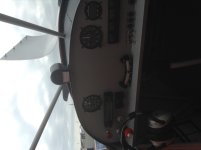
Some interior shots of Marks LSA
 

Attachments

  • photo1140.jpg
    photo1140.jpg
    647.3 KB · Views: 1
  • photo1141.jpg
    photo1141.jpg
    748.1 KB · Views: 1
  • photo1142.jpg
    photo1142.jpg
    847.2 KB · Views: 1
  • photo1143.jpg
    photo1143.jpg
    1.4 MB · Views: 1
Know this is a fairly old thread but wanted to throw out another thought on the "Superiority" of the LSA/Patrol to the SuperCub. A few folks were comparing the performance difference to just the differences between the airfoils. My suspicion is the choices Bob made with the wing CONSTRUCTION goes alot more to accounting for the improvement in cruise speed (or lower power required for a given cruise speed). His choice of an aluminum wing that could handle torsion loads without needing an aft strut...a rigid enough lift strut that didn't require jury struts..keeping the aileron controls IN the wing instead of hanging in the breeze ala Supercub...the aileron hinges not hanging under the wing...etc. etc. All of this added up to greatly reduced parasitic drag. While the nice Riblett airfoil should get some credit for a reduction in induced drag...parasitic drag was the MAJOR improvement by Bob.

Way back in the 70's Jim Bede wrote a series of articles on design for Sport Aviation magazine that had great info on the benefits of removing parasitic drag. Bob has incorporated about 75% of the things Bede mentioned (the next ones would be making the tailplane cantilevered to remove the brace wires (weight penalty) and the big one...fully cantilevered wing (MAJOR weight and complexity penalty)). So really Bob has hit the sweet spot between aerodynamic cleanup vs. build complexity vs. weight increase for the aero improvement.

On the STOL side of the equation, some of the hardcore STOL crowd will say there is no such thing as too much drag when you are trying to slow down for a short runway...to which I personally think "horse feathers"...if you are building your own plane, "controllable" drag can always be had in the form of flaps or spoilers...and removed when you are trying to climb. The "like lots of drag" crowd seems to forget that on climbout the extra thrust required to overcome that "permanent" drag, could be put to use as extra climb rate to clear that big tree on the end of the runway if it wasn't a permanent fixture of the plane.

My $.02 worth and worth what ya paid for it.

You hit the nail on the head. Living in Alaska, the first question everyone asks me is how the Patrol compares to a Super Cub. I usually point out that it's the same weight as a Cub, Same wing area, thicker airfoil, twice the flap area (9' x 20" flaps vs. 5' x 12" flaps on a cub) and same or greater power than a cub. Why wouldn't it take off and land just as short? Then I point out all the parasitic drag that's missing on the Patrol. Hanging out with Mark and AK_Patrol at the Alaska Airman's Show last year I had this conversation a lot. And having a cub parked 50' away just made it that obvious.
 
I've been away, and just now catching up to all of the great stuff that has been posted. Really appreciate it, everybody. I enjoyed seeing the video of Bob landing in the snow. What a great plane. I was sold on the flapless a good while back ago, just even more convinced it's the only way to go for this little plane.
 
I understand all the reasons for not putting flaps on the LSA, but if a guy was going to put flaps on the LSA would he want to stick with the LSA airfoil or use the Patrol airfoil, scaled to LSA size?
 
The LSA has a 6% camber airfoil versus 4% camber on the Patrol. More camber means more lift at any airspeed but limits top speed some, better fit for an LSA where you are limited by regulation on top speed.
 
I read in an article that Bob was talking with Riblett about the Patrol airfoil, and Harry asked him why he didn't want to use the 6% camber airfoil. Bob said he didn't think he needed it with the big flaps, and Riblett agreed. That makes me wonder if a guy wanted flaps on an LSA, if he might be better off using the 4% airfoil?
 
I think a guy would be better off if he built the plane like Bob designed it. Ask anyone who has flown a BH LSA if they thought it needed flaps. After flying it. Mark
 
Gents I don't think the 6 stands for 6% camber. I have the Riblett book. The number is the lift coefficient at cruise.

My dad was liaising with Harry R in about 1996 and put a GA30 section on W8 Wittman tailwind- I built 27 of the 28 ribs for these new wings in 1998- I'd do one every night after work. For eg The GA30-413.5 on the Patrol is max thickness at 30% chord, lift coefficient at cruise is 0.4, max thickness is 13.5% of chord of wing.
the naming convention for the NACA airfoils is different and is the way the previous authors have been writing. For example the naca2412 used on the wittman buttercup (drawings by earl Luce), wittman big x ( I just bought the drawings from Randall Bray in Georgia they arrived last week to Australia ) and many cessnas, is 2% camber, max thickness at 40% chord and wing thickness 12 %.
Regards peter
plans built 4 place #1186
 
Somewhat confusing, direct from first page of his book, "4 camber levels, 2,3,4,6, indicating the approximate design lift coefficient in tenths". I hadn't caught that distinction in the several times I read the book. So I guess it doesn't mean % camber, still higher numbers mean higher camber.
 
For you guys with the Riblett book, does he talk about flaps? Still trying to sort out if the Bearhawk LSA airfoil would be okay with flaps, or if it would be better to use a Bearhawk Patrol airfoil if one was going to use flaps. (Like I said, I already understand all the reasons not to use flaps.)
 
For you guys with the Riblett book, does he talk about flaps? Still trying to sort out if the Bearhawk LSA airfoil would be okay with flaps, or if it would be better to use a Bearhawk Patrol airfoil if one was going to use flaps. (Like I said, I already understand all the reasons not to use flaps.)

Here's Harry's comment on flaps " A good airplane design should start with the flaps, and then the rest of the airplane should be designed around the flaps" All Riblett airfoils are designed to work with flaps. If you have to build an LSA with flaps, not something I would do, either the 30-613.5 or 30-413.5 would work, performance of course would be somewhat different.

If you are really serious about this you owe it to yourself to talk to the designer. Bob is very reasonable about listening to peoples ideas. As an example, the first time I met Bob I told him I was thinking of building a Bearhawk with a Ribblett airfoil (this was before the Patrol). That would have been the end of the conversation with most designers. Instead Bob said go for it and let me know how it turns out, I was rather stunned. If he can't talk you out of flaps he may have ideas for the best way to do it with flaps.
 
Last edited:
Thanks Rod.

Again, I understand all of the reasons for building the Bearhawk LSA exactly as designed by Bob. My question is not really about the Bearhawk LSA per se. I intended it to be more of a discussion around airfoils and flaps. Like you say "either the 30-613.5 or 30-413.5 would work (with flaps), performance of course would be somewhat different."

That difference is precisely what I am trying to understand. How would the same airframe (in this case the Bearhawk LSA) perform if designed with the 30-613.5 with flaps vs the 30-413.5 with flaps?

Another way of looking at it is asking the question, why did Bob choose to use the dash 6 airfoil for the LSA, rather than the dash 4?

Given that the LSA and the Patrol have similar missions, I'm thinking that maybe the reason Bob choose the dash 6 for the LSA is that he knew he wasn't going to put flaps on the LSA, and given no flaps he felt the dash 6 airfoil was more appropriate. It could well be that if Bob had decided that the LSA would use flaps, he might have stuck with the dash 4 airfoil. This is just speculation.

I do own the LSA plans, but I have not decided on building it. I am hoping that this next airplane might be of my own design, and I am looking at the LSA for ideas, particularly the airfoil, some wing details, tail and the landing gear.
 
"That difference is precisely what I am trying to understand. How would the same airframe (in this case the Bearhawk LSA) perform if designed with the 30-613.5 with flaps vs the 30-413.5 with flaps?"

My limited understanding indicates all else being equal the 613.5 airfoil will cruise a little slower and stall a little slower. The difference won't be big, maybe a couple knots on both ends

"Another way of looking at it is asking the question, why did Bob choose to use the dash 6 airfoil for the LSA, rather than the dash 4?"

The only one who can answer that is Bob.

"Given that the LSA and the Patrol have similar missions, I'm thinking that maybe the reason Bob choose the dash 6 for the LSA is that he knew he wasn't going to put flaps on the LSA, and given no flaps he felt the dash 6 airfoil was more appropriate. It could well be that if Bob had decided that the LSA would use flaps, he might have stuck with the dash 4 airfoil. This is just speculation."

I wouldn't consider it the same mission. The Patrol is a very high performance back country 2 seat aircraft. The LSA is just what it says, designed to meet LS regulations, and also has short field capabilities.

"I do own the LSA plans, but I have not decided on building it. I am hoping that this next airplane might be of my own design, and I am looking at the LSA for ideas, particularly the airfoil, some wing details, tail and the landing gear."

That sounds great, I would recommend getting Harry's book from EAA and some of the other airfoil/aerodynamic books that he references.
 
Last edited:
Another possible factor is the regulatory speed limit that the LSA was designed for, vs his priority for fast cruise speed on the Patrol.
 
I have found this discussion interesting as I have flown my LSA about 115 hours in a bit over a year. During this time I have made it a point to practice short field landings on actual short fields as much as I can. Frankly, the LSA can be landed so short that I would not want flaps on it. It can be hard slipped at minimum airspeed with full control and confidence. This allows for a very steep descent when landing over trees. The slip can even be safely carried into the flare, if I find myself with a little extra speed, as it can be eliminated instantly. I find that I get the shortest landings by touching down tail low ( close to or 3 point) and braking hard while holding the tail up with the elevator. This may sound risky, but it is very easy to control because of the compliant main gear and effective elevator. My airplane has a full panel with electrical system as well as conventional covering and full paint, so it is heavier than Bob's, and I'm a big guy at 260 lbs. still, it climbs well over 1,000 rpm and will cruise at 112 mph indicated at 75% on my O-200 with 3 blade warp drive prop. That said, I usually cruise at 100 mph indicated on slightly under 4 gph.

While the discussion of flaps for the LSA is an interesting intellectual exercise, I don't think flaps would add anything useful to the design. It is pretty great as it is. Of course builders can do what they want, but for me, the design is about perfect.

Bob Way
 
Glad to see everybody still here adding their this and that's. I haven't went further than just buying my plans since I'm taking care of an elderly parent the last five years which needs plenty of attention with his memory problems. Sure hoping the Bearhawk community continues to grow. Still looking fwd to a scratch build, whenever I can invent more time.
 
Hi everybody, very nice discussion here about flaps vs no_flaps solution.
Even though it is quite easy to understand that original LSA construction is perfect, still there will be people thinking to make sort of combination LSA+Patrol.
The reason can be for example really different rules for aircraft operations around the world. For example, the best way for me would be to have Patrol but keep it in the category under 600kg/1322lbs MTOW due to local rules. For Experimental category is here very limited support from government side rather suppression than support, but we have pretty nice category for home-builts /-kit-planes below MTOW 1322lbs (no restrictions nearly).
The engine availability is another story and can be limited as well. ROTAX has very strong position here due to long and good record of reliability / but it seems to be definitely not suitable for Patrol.
 
I wouldn't be surprised if the weight of the Patrol fuselage is more than 50lbs more than the LSA. Probably less. The Patrol flies faster so needs 10 lbs of lead in the elevator for balance. That probably requires 40lbs more engine weight to offset.

You could build a very light Patrol, but I think it would cost you "CG" useful load. The LSA is designed for a lighter engine, and lower Vne.

I am building a 4 place, but my second choice would be an LSA. Brilliant design. Nothing against the Patrol.
 
Another data point..... July 2008 Beartracks.....(the LSA was not designed at this point)

"Testing was done a Patrol to explore it for an LSA. Using 80 hp it took off in 600', using 100 hp it took off in 400', and cruise at 120 mph on 80 hp. The LSA version of the Patrol back then would have 27 gallons of gas, no interior, no control surface lead weights, an O-200 or 0-235, and weight about 850 lbs. (850? ....Thats what it says...) "

The red line was limited from 165 mph to 140 mph by leaving the control surfaces weights off. I think that would also demand no electrical system, no avionics, wood prop.

The lightest weight O-360 is about 270 pounds. An O-200 would save 70 - 100 pounds, a Rotax would save more...the internet says they are half the weight of that light weight O-360. It would need a long engine mound to place the CG in a user friendly position.

If I wanted an LSA aircraft I would build the LSA.
 
Hi guys, I'm new here. Been reading the flap comments with great interest. I have the LSA Bearhawk plans and I am scratch building a quite different airplane. It is 2 place side by side and it will have flaps. Using the Lsa wing. The reason I am using flaps is only partly due to lower airspeeds on landing. I have been flying the back country for almost 50 years, 30 in Idaho. Even though I have been slipping airplanes with and without flaps for years, landing at short rough strips the visibility and control with flaps is superior to slipping IMO. The plane will have a 30 foot wingspan , 160 horse ) 320. Currently is setting on the gear and wing assembly will be starting soon. Looks just like the 4 seater only smaller.
 
Back
Top