

You should never need to remove those connections for anything routine. When I removed them for repairs on one occasion, I never lost the bushings.
I do agree they seem unnecessary, but it's a non-issue long term once the build is finished.
-
I wish I had more experience with other light aircraft, but I don't. There is some kit stuff that should have been sorted a long time ago. Bushings are way to prevalent in the BH. 1/8" cable hardware ends up using 1/4" fasteners, but to save weight the kits use 3/16" fasteners, and bushings. It should have been way to easy to upside to 1/4" fasteners, but they never did.
Bushings suck, and you will lose them. There is am aviation clevis fork that fits 1/8" cable, but has 3/16" holes. Spruce sells it as engine control forks, but they are over 3000 lbs strength (1/8 cable is 1900). I used a lot of them in lieu of turnbuckles. -
Question on the lower tail wire attachment - the factory drilled holes in the fuselage lug/bracket are 3/16 and AN664 clevis ends are 1/4. I'm hesitant to upsize the hole and reduce the edge clearance. The alternative seems to be an AN3 clevis bolt and bushings. How are others doing this? -
Aren't there so many tempting rabbit holes that we pass on our building journey... So many times I have had the option of "spend the money and get it done" vs "spend lots of time researching and spend less money but then still end up spending the same money later." There is value in the education and in the fun of chasing the rabbits, but the tuition for these lessons is reflected in the build time.Leave a comment:
-
I would pay the $800. Those streamline wires are a thing of beauty. I bought round (bottom) and streamline (top). I will feel secure knowing they are back there protecting my tail. When you consider all the money you have to spend to complete a flying airplane, then consider the consequences of a component failure, I'd look elsewhere to save money.
My .02
Gerry
Patrol #30 WingsLeave a comment:
-
Yeah that's interesting huh? Austenitic stainless reverting to ferritic under stress as I understand. I noticed the bent portions of a sheet metal part were magnetic while the rest wasn't. I was just reading about this the other day:
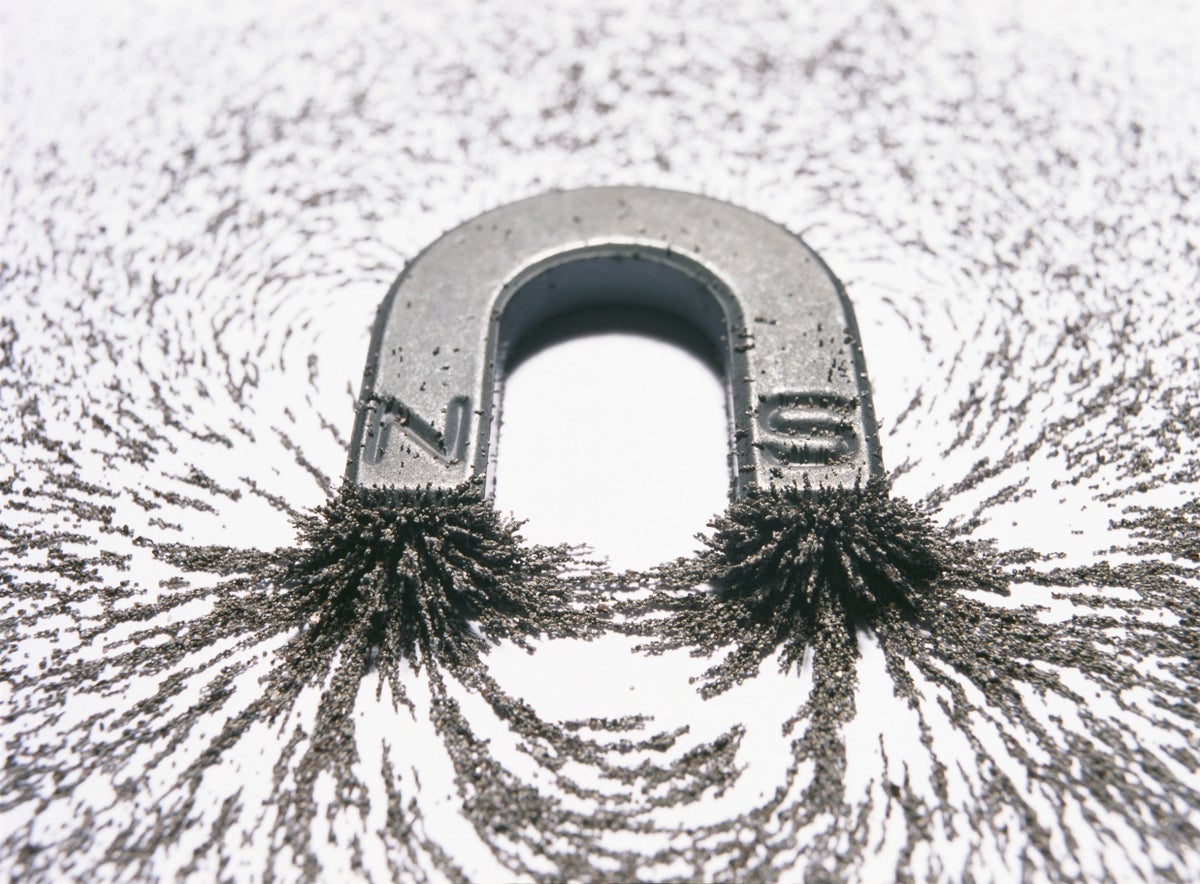
It's apparently a quantum level effect.
Even cut threads will still do it a little.Last edited by Archer39J; 01-09-2018, 09:11 PM. -
And now I've also learned that some cold worked stainless alloys can become magnetic (https://www.azom.com/article.aspx?ArticleID=1140 ) which might explain why my compass isn't happy. I mounted it with stainless screws(confident that the base material is naturally non-magnetic) but, if they happen to have rolled instead of cut threads......Leave a comment:
-
Yep, I just read a thread on the ShortwingPipers forum relating several "no factor" experiences and one "dang near bought it" account.
If nothing else, this thread changes my pre-flight for tail wires which will now include a "wipe them down with a rag and feel for nicks" instead of just a visual and pluck check.Last edited by BTAZ; 01-09-2018, 08:43 PM. -
Interestingly enough the quote from this reference( http://hghouston.com/resources/mater...ing-properties ) states that "Cold working increases the fatigue strength of the austenitic stainless steels. However, the fatigue strength of these cold worked alloys is reduced by notches, as compared to notched fatigue strength in the annealed condition"
So while actual fatigue performance goes up, susceptibility to a complete failure from a nick also goes up.
Which explains the AD ( http://myplace.frontier.com/~air.bou...AD60-01-07.htm ) on Pipers requiring repetitive inspections of streamlined lower tail wires with the inspections eliminated for round lower tail wires -
Also of consideration is the punishment for failure. I've read accounts that ranged from "didn't notice till I was on the ground" to "fell out of the sky"...Leave a comment:
-
Ah, I missed that they spec "cold drawn" bar too, which could mean anything. And I had it in my head they said "breaking" not "Min. Strength". So yeah, there's not really a way to tell. Though as work hardening increases your fatigue strength suffers, something to keep in mind.Last edited by Archer39J; 01-09-2018, 07:38 PM. -
Depends on what you are using for the calculation.Originally posted by Archer39J View Post
Yield strength for 4130N at .2" diameter is 1,986 lbs
Yield strength for 3/16" round 316 stainless in its annealed state is 1,625 lbs so "worst case" you are roughly 15% below the "lowest yield strength approved" 4130N solution.
But oddly, the "Min. strength spec." for the Bruntons 3/16" wires is in the 2100 to 2400 lb range. If this is a breaking strength spec(note this number is close to the calculated Tensile strength of 3/16 diameter round annealed 316 stainless) then their yield spec is very likely lower than the 4130N option. If Bruntons "Min. Strength" spec is actually a yield strength that is increased because of the "cold working", then even the 3/16" Brunton wires are "stronger" than the 4130N option.
I did find this table( http://hghouston.com/resources/mater...ing-properties ) that indicates both the yield and tensile strength of 316 stainless can double from the "annealed" to the "Full hard"(referenced to their Rockwell hardness number) condition. Interestingly, it follows that if one can determine whether the Brunton spec is a tensile strength or yield spec., one could then back out the required/desired Rockwell number and the amount of "work hardening" imparted during manufacture.
What is also interesting is that there are currently three "approved" solutions that vary considerably in their "strength" properties, their aerodynamics, and their vibration behavior.
1x19 5/32" round cable is pretty far in behavior/properties from machined round 4130N which is itself different than the "Cold worked" streamlined 316 stainless of the custom Brunton wires.
Then add in that wire tension isn't carefully set(which means the resonant frequency is different from one plane to another), that the end fittings can be "rigid"(Bob terminals), offer flex in one direction(eye terminals to a tab) or a wide range of movement(some cable terminals and "production wire end terminals" akin to Cub parts) and either we are really lucky or the design is pretty tolerant.
This has been a very interesting discussion and, like BDflies said, I am looking at my tail wires with a new level of awe and healthy respect.
Last edited by BTAZ; 01-09-2018, 07:26 PM.Leave a comment:
-
I did a quick, but conservative, calculation and figure a pound of total downforce generates about 1/2 pound of tension in each top wire. If the wire is good for 2k pounds that translates to a total downforce of 4k pounds. I am guessing the failure mode has a lot more to do with the bending forces on the threads from vibration and handling. I just feel better with flexible wires vs solid.Leave a comment:
-
While not equivalent they both end up relieving stress in the metal. Regardless, from the breaking strength provided by Steen it seems we can infer they are using annealed 316 from what we calculated. The profiled wires having a higher breaking strength demonstrates the effect of work hardening when forming that shape. Rolling the threads will harden the 316 locally.
ETA: Never mind, since they don't call it a breaking strength...Last edited by Archer39J; 01-09-2018, 07:57 PM.


Leave a comment: